More from this brand
Technical data
| Attributes | |
| ARTICLE | P -1 |
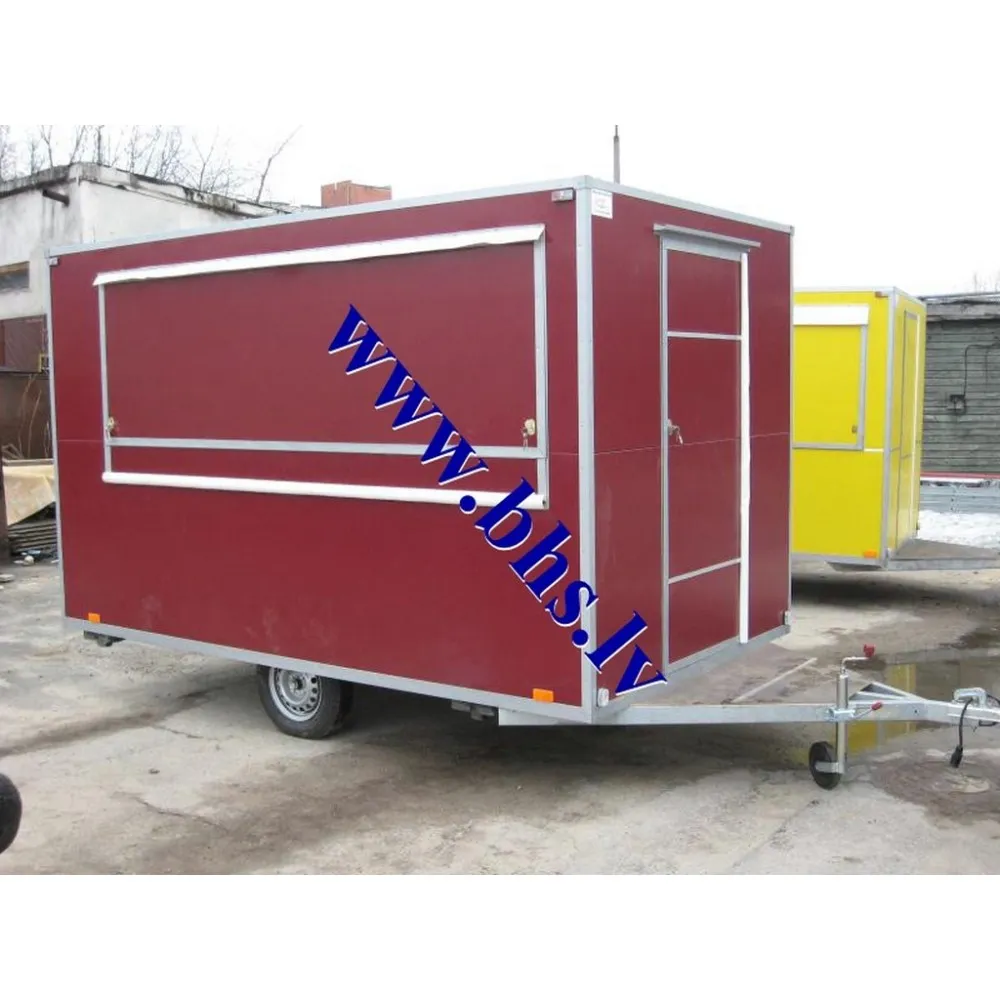
A catering trailer provides a mobile base for professional kitchens, allowing equipment, ingredients and serving stations to be transported to events, markets or temporary sites. The unit is towed behind a vehicle, giving a secure, weather-resistant enclosure that moves as a single load. Inside, shelves, rails or lashing points hold appliances and supplies in place during transit, while the trailer's suspension absorbs road shocks so that delicate items arrive undamaged.
The operator loads the trailer by wheeling or lifting equipment through the rear or side doors, organising it so that heavier items sit low and towards the axle to keep the towing balance stable. Once loaded, the doors are closed and locked, and the trailer is hitched to the towing vehicle. On arrival, the doors are opened, the load is unloaded in reverse order, and the trailer is unhitched, ready to serve as a secure storage cupboard or to be towed to the next location.
Construction is typically a steel or aluminium chassis with a box body of aluminium sheet or composite panels, giving strength without excessive weight. The floor is usually non-slip and may include drainage channels for cleaning. Lighting and reflectors are fitted to meet road regulations, and a jockey wheel simplifies manoeuvring when unhitched.
Cleaning involves sweeping the floor, wiping down surfaces and checking that lashing points and shelving remain secure. The trailer's roadworthiness—tyres, lights, brakes and coupling—must be inspected before each journey to comply with transport regulations.
The BHS.LV P-1 is categorised under trailers in the professional catering equipment catalogue.