More from this brand
Technical data
| Attributes | |
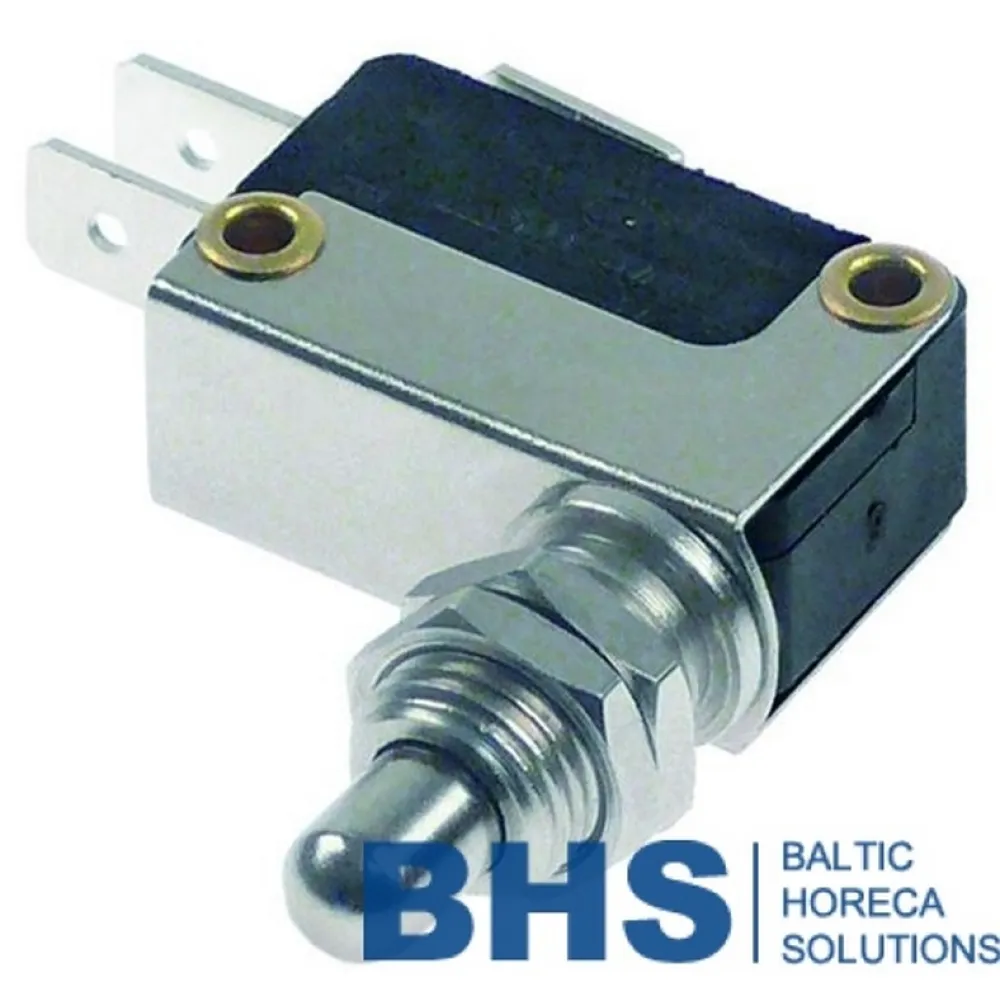
| ARTICLE | L3240410 |
| VOLTAGE | 16(4)A 250V |
A microswitch acts as the safety and control sentinel inside professional catering appliances. When a door closes, a basket lowers or a thermostat reaches its set point, the switch's tiny lever or plunger trips, breaking or making an electrical circuit instantly. This immediate response prevents overheating, stops motors when panels open and ensures equipment only operates when correctly positioned. Without it, fryers might continue heating with the basket raised, ovens could run with doors ajar and boiling pans might not cut power when tilted. The operator rarely sees the switch, but its role is constant. On a convection oven, it confirms the door is latched before the fan and elements start; on a bratt pan, it interrupts power when the pan is tipped for emptying; on a fryer, it stops the heating element if the oil level drops too low. Each movement of a lever or pressure on a plunger sends a clear signal: safe to proceed or immediate shutdown required. The switch latches instantly when the oven door reaches the sealed position so the heating elements engage only after the cavity is fully closed. The switch mounts to a bracket or chassis inside the appliance, aligned so the moving part—door, lid or mechanism—contacts the actuator at the correct moment. Wires connect to the terminals, typically two for the switching circuit and one for the common contact. Once secured, the appliance is tested: the door is opened and closed, the basket raised and lowered, or the pan tilted to verify the switch trips at the right point and the equipment responds as expected. Construction centres on a sealed housing that shields internal contacts from steam, oil and cleaning chemicals. The actuator, usually a small lever or button, extends through the housing to meet the moving part of the appliance. Inside, a snap-action mechanism ensures the contacts open or close decisively, even if the actuator moves slowly. The voltage rating of 16(4)A 250 V matches the demands of commercial catering equipment, allowing the switch to handle the current drawn by heating elements, motors and control circuits without overheating. Cleaning is minimal but precise. The housing should be wiped with a damp cloth to remove grease or residue, taking care not to bend the actuator or allow moisture into the terminals. If the actuator becomes sticky or the switch fails to trip, replacement is the only reliable remedy—internal parts are not serviced in the field. This LF microswitch fits over forty brands of professional catering equipment, including AGA calender and mangle ironing machines, Angelo Po boiling pans and convection ovens, Fagor bratt pans and fryers, Hobart fryers, and Nuova Simonelli coffee grinders. The extensive compatibility list places it in the spare-parts section of the catalogue, where it serves as a direct replacement for the original component.