More from this brand
Technical data
| Attributes | |
| ARTICLE | L00-50481 |
| POWER | 8 kW |
| SIZE L/W/H | 485 / 530 / 280 mm |
| WEIGHT | 24 kg |
The price is indicated without transport costs.
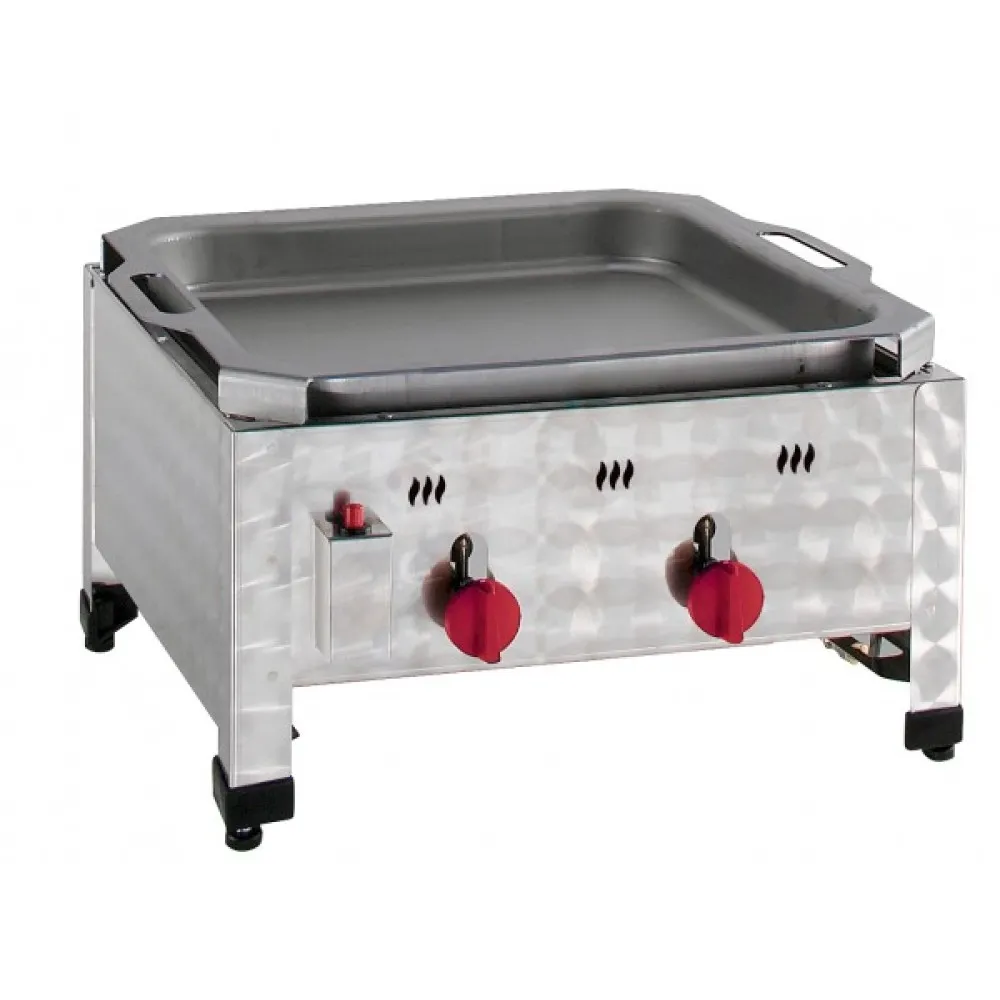
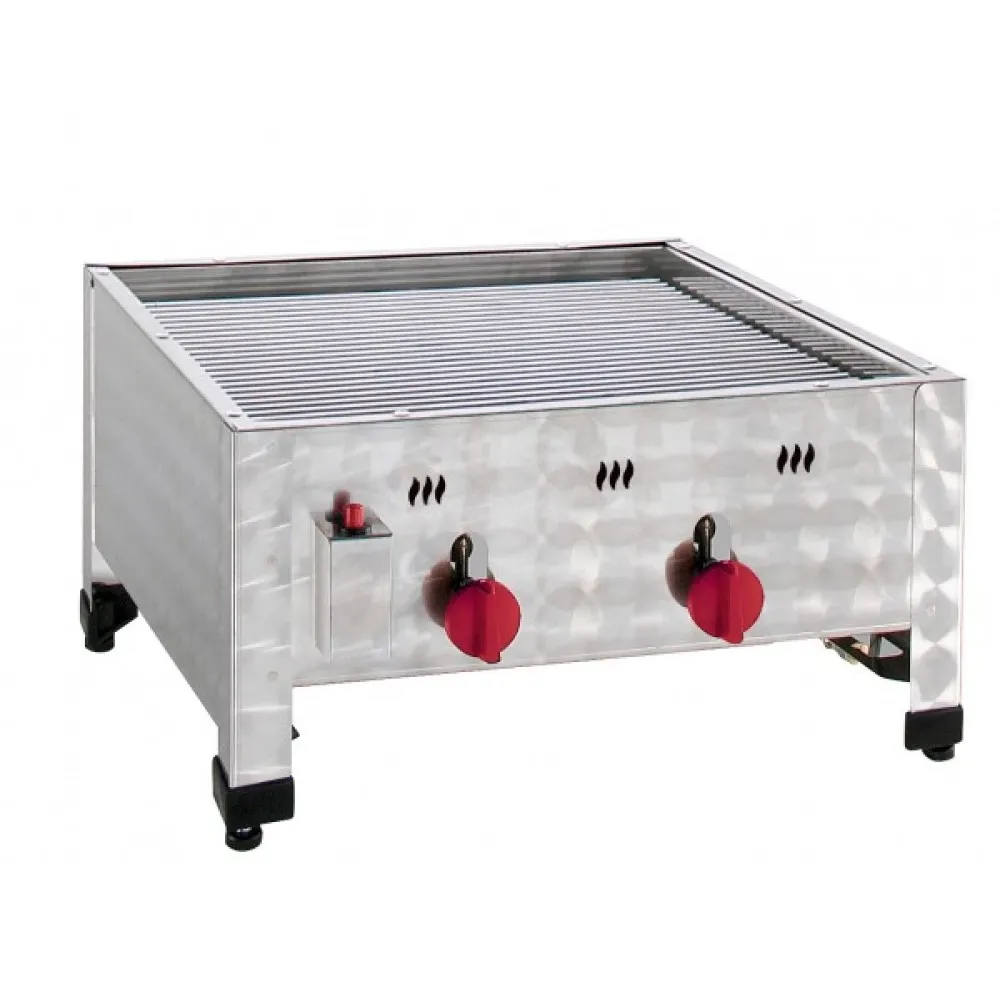
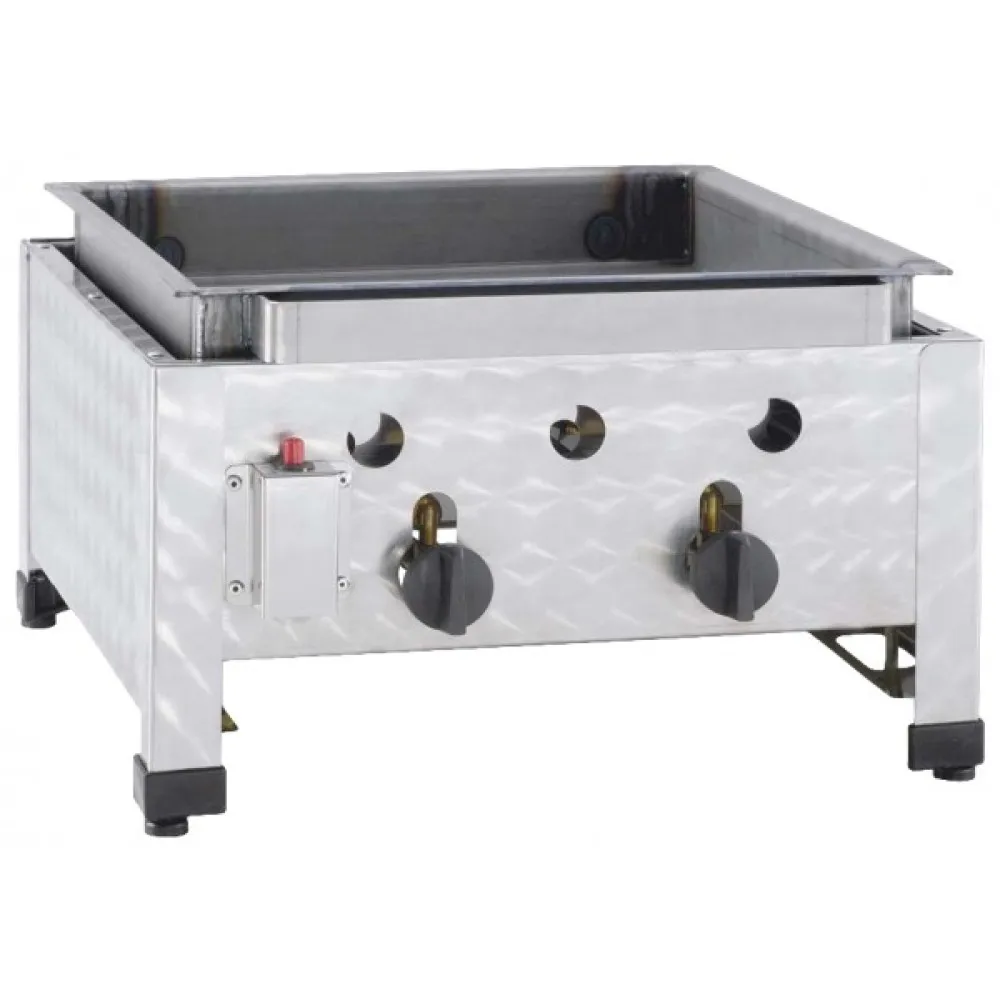
A gas combi table grill heats food from below with controlled flames, combining direct grilling on a metal grid with indirect roasting in a pan. The burners generate radiant heat that rises through the grid, searing meat or vegetables, while the pan beneath catches juices and fat, allowing them to baste the food or be drained away. This method gives the char and texture of an open grill while keeping the food moist and reducing flare-ups from dripping fat.
The operator places food on the grid or in the roasting pan, lights the burners, and adjusts the three separately controlled burner sections to spread heat evenly across the cooking surface. A flame cover sits over the burners to protect them and to help distribute heat more uniformly. As the food cooks, juices collect in the tray below, which can be removed for cleaning or to reduce smoke.
The grill is built with a double-walled stainless steel casing that insulates the heat and protects the outer surface from high temperatures. A hose and standard pressure reducing valve are included for connection to propane or butane gas cylinders. The grid measures 435 by 485 millimetres, and the roasting pan is 440 by 490 millimetres with a depth of 57 millimetres, providing space for larger cuts or multiple portions.
An 8 kilowatt power rating indicates the heat output the grill can sustain, suitable for continuous use in a professional kitchen. The dimensions of 485 by 530 by 280 millimetres allow it to fit on a standard worktop, while the 24 kilogram weight makes it stable but still movable for cleaning or reorganisation. The gas consumption of 0.63 kilograms per hour helps plan cylinder changes during service.
Cleaning involves removing the grid and roasting pan to wash separately, emptying the juice tray, and wiping down the stainless steel casing. The flame cover and burners should be checked for grease build-up to maintain even heat distribution and safety.