More from this brand
Technical data
| Attributes | |
| ARTICLE | 204189 |
| SIZE L/W/H | 180 |
| NOTES | blade hardness 52-54 HRC |
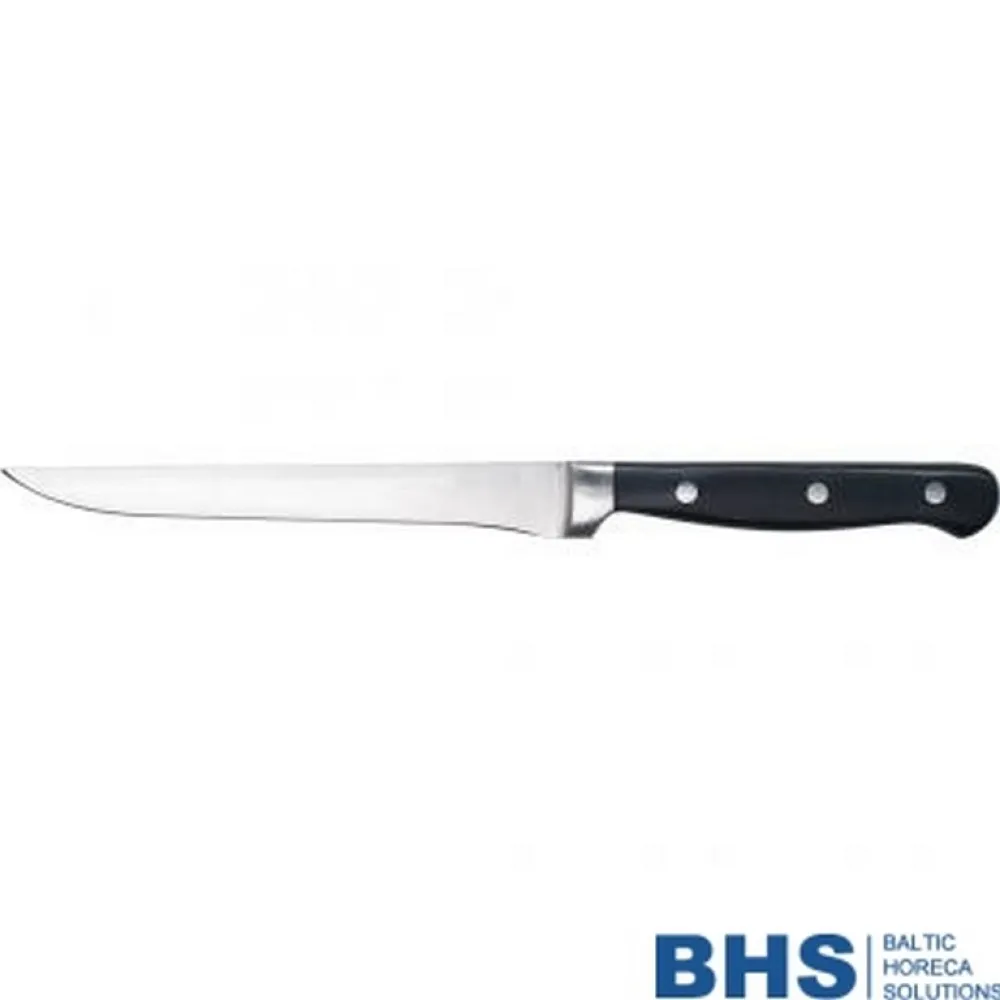
A fillet knife slices along the bone, separating flesh from skeleton with a single draw. The long, narrow blade flexes to follow contours without tearing, while its thin edge parts membranes cleanly. This design keeps the yield high and the waste low, essential when portioning delicate fish or trimming poultry breasts for service.
The operator holds the handle in a pinch grip, thumb and forefinger close to the heel for balance. Food rests on a damp cloth or cutting board to prevent slipping. Starting at the head or tail, the knife is drawn towards the body with light, even pressure, letting the blade do the work. Each pass removes a strip of meat; the process repeats until the fillet is free. The same blade, turned edge-up, trims away any remaining skin or fat before plating.
The blade is hardened to 52-54 HRC, a range that balances sharpness retention with controlled flexibility. Too soft, and the edge rolls; too hard, and it chips. This hardness allows the knife to hold its geometry through repeated honing, so the initial precision is maintained over weeks of use.
Overall length is 180 mm, a dimension that suits medium to large fish such as salmon or sea bass. The black handle provides a non-slip surface when wet, and its colour helps the knife stand out against stainless worktops and cutting boards.
Cleaning follows the same care as any professional blade: hand wash immediately after use, dry with a lint-free cloth, and store in a knife block or magnetic strip to protect the edge. The hardness that keeps the blade keen also makes it vulnerable to corrosion if left damp, so prompt drying is critical.