More from this brand
Technical data
| Attributes | |
| ARTICLE | 286222 |
| SIZE L/W/H | 230 |
| NOTES | steel with high hardness 54-56 HRC |
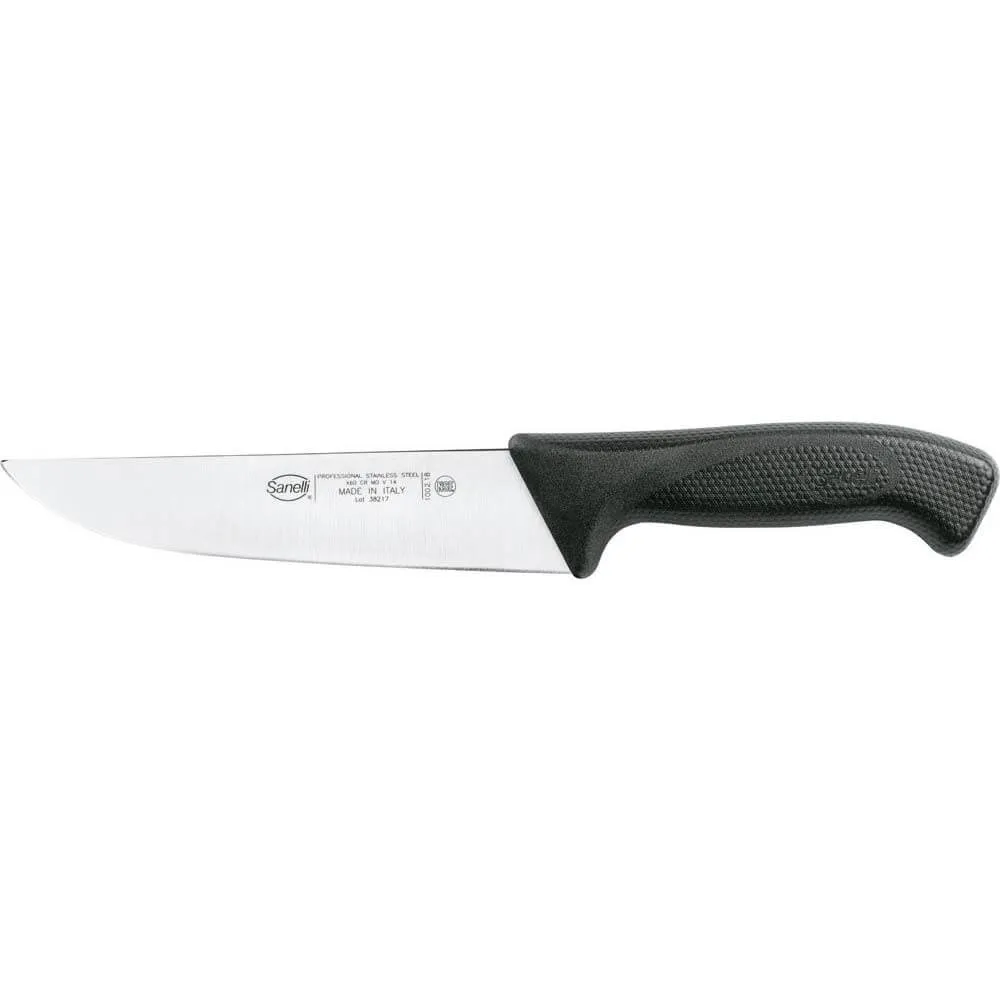
A cutting knife of this type relies on a rigid, finely ground blade to transfer the force of the chef's stroke directly into the food. The edge geometry and steel hardness determine how cleanly the blade slices without crushing or tearing, while the length of the blade allows long, continuous cuts through large ingredients without sawing. The balance point near the bolster ensures control during repetitive tasks, reducing fatigue over a full service period.
To use the knife, the operator grips the handle firmly, aligns the blade with the cutting board, and draws the edge through the food in a single smooth motion. The high-hardness steel holds its sharpness longer than softer alloys, so the knife requires fewer interruptions for honing during busy service. The 230 mm blade length suits portioning joints, filleting whole fish, or slicing dense vegetables like cabbage and squash.
The blade is made from steel hardened to 54-56 HRC, a range that combines wear resistance with enough toughness to resist chipping. The black finish reduces glare under kitchen lighting, helping the chef maintain visual focus on the cut line. The handle material is not specified, but professional knives of this type typically use a synthetic or composite grip that resists moisture and provides a secure hold even when wet.
The 230 mm length is a standard dimension for a chef's knife in European professional kitchens, fitting comfortably in a standard knife roll or magnetic strip. The blade's hardness rating means it will retain its edge through extended use but must be sharpened with diamond or ceramic stones rather than softer honing rods. Regular stropping after each shift removes microscopic burrs and extends the interval between full sharpening sessions.
This knife is categorised in the Stalgast catalogue under cutting tools, alongside other fixed-blade knives and sharpening accessories.