More from this brand
Technical data
| Attributes | |
| ARTICLE | 803021 |
| POWER | 10,8 kW |
| SIZE L/W/H | 728 / 816 / 1505 mm |
| VOLTAGE | 400V |
| BASKET SIZE | 500 x 500 mm |
| NOTES | Maximum height of the dishes 415 mm |
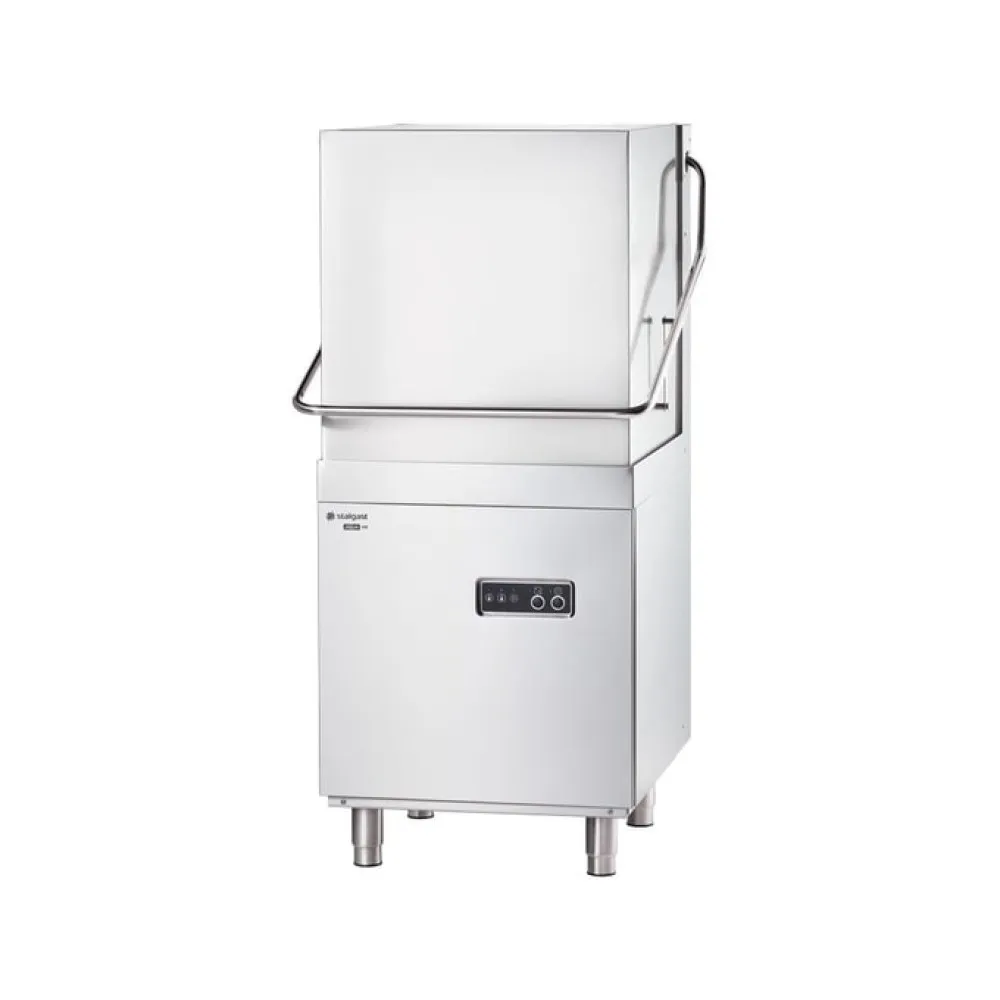
Hood type dishwasher MANUAL
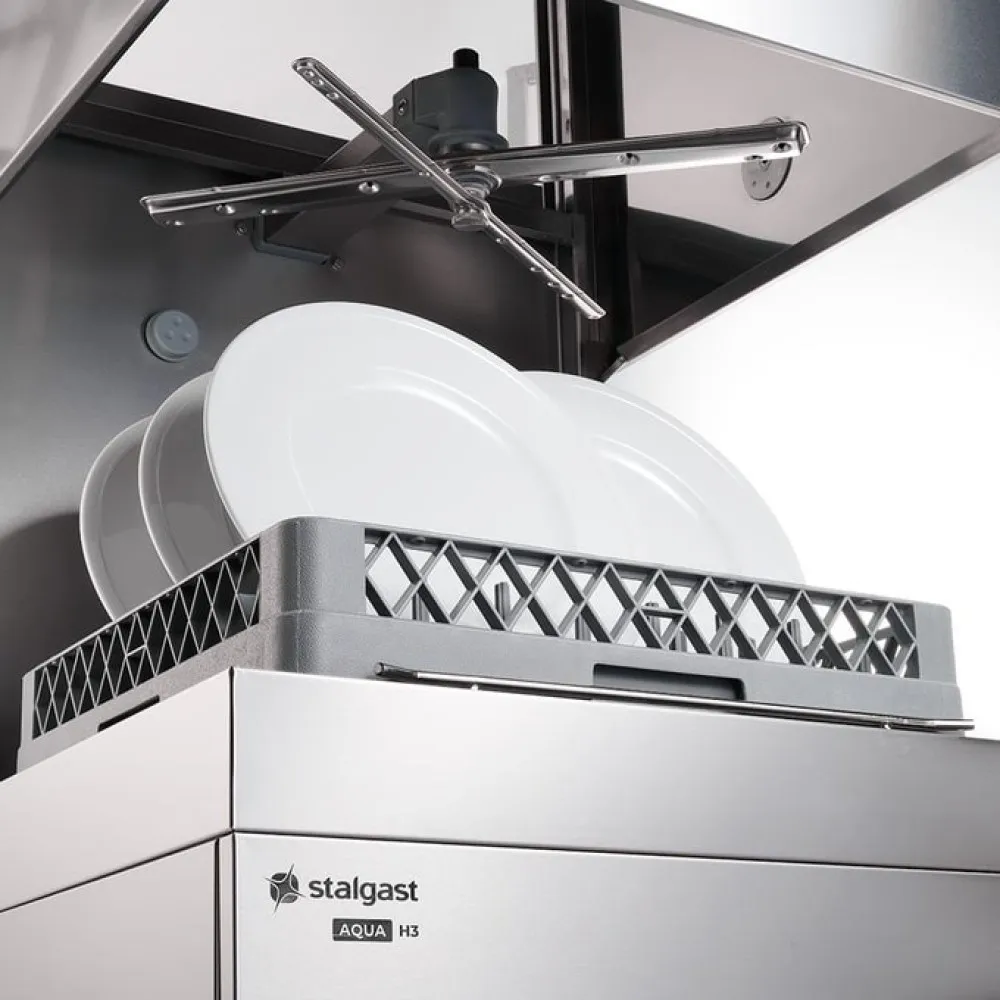
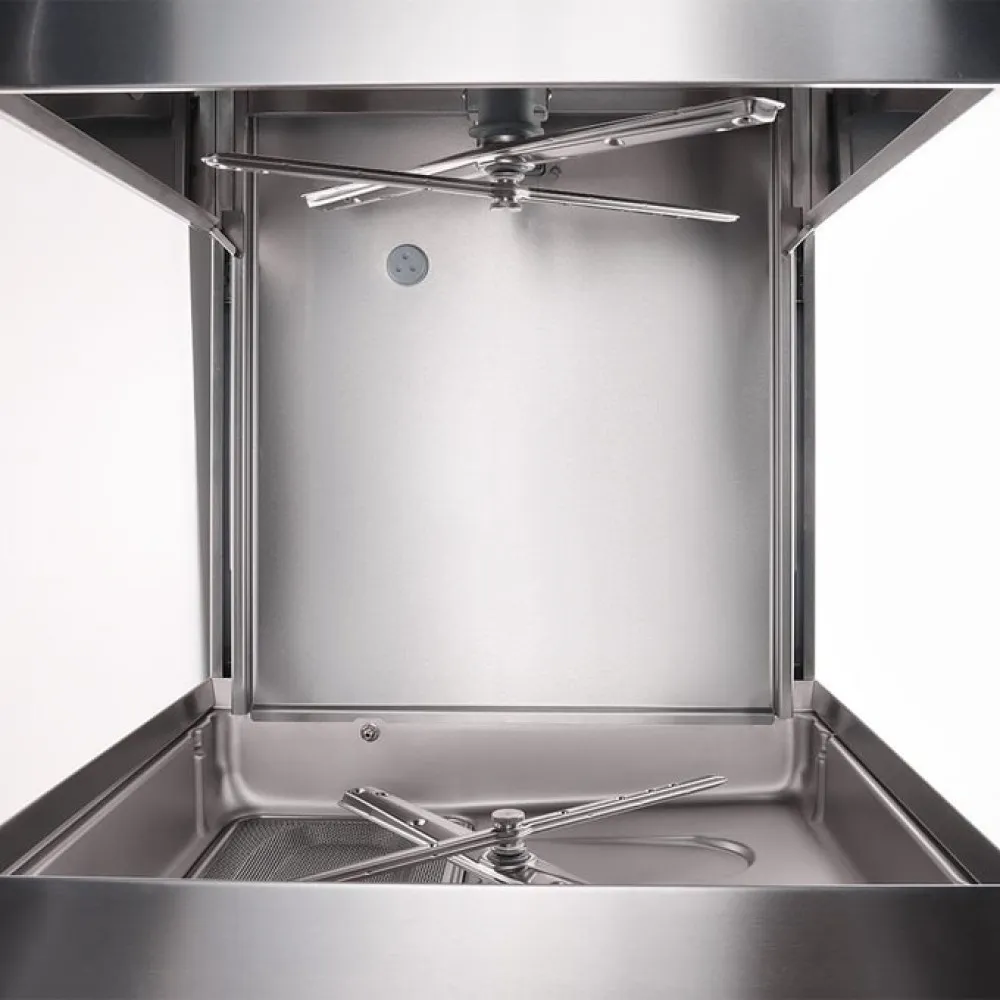
A hood type dishwasher lifts away from the worktop to clear space while loading and unloading. Hot water is sprayed from rotating arms above and below the rack, removing food residue and sanitising dishes in under three minutes. The closed chamber traps steam, speeding up the cycle and reducing energy use compared to open-front models.
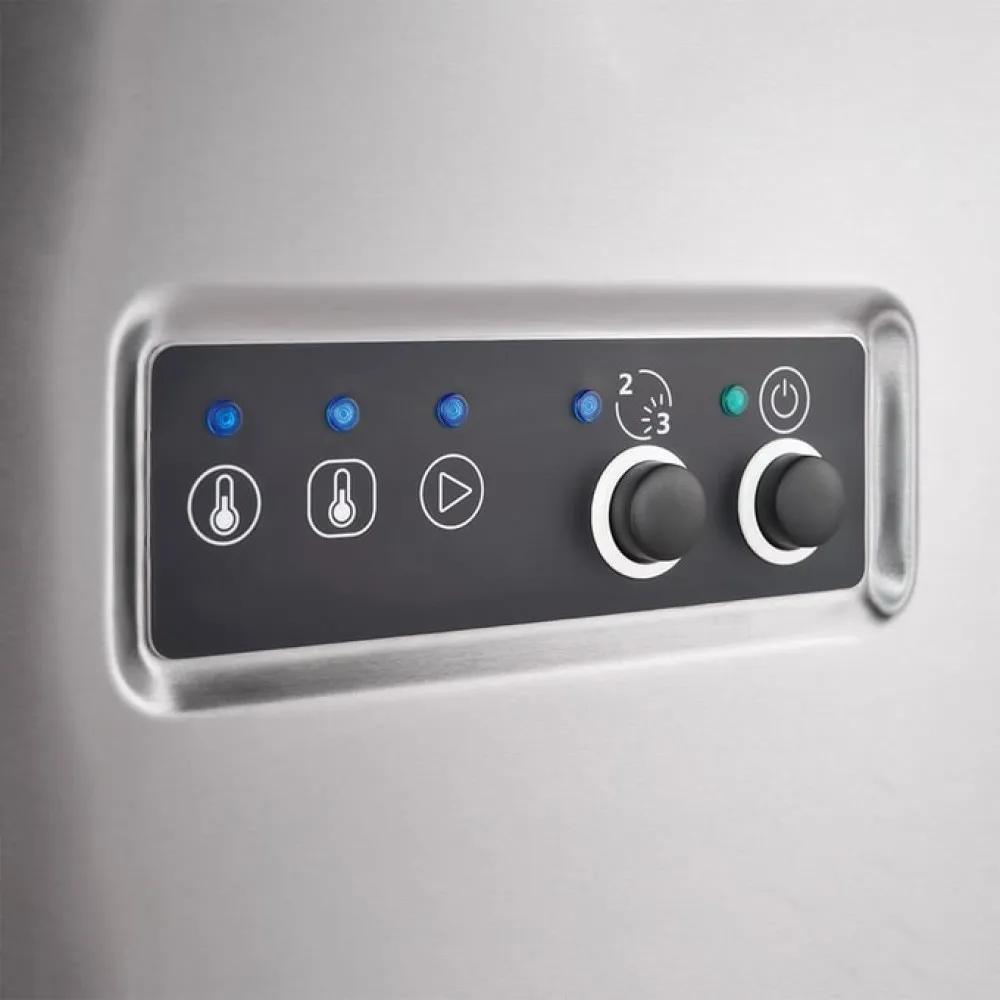
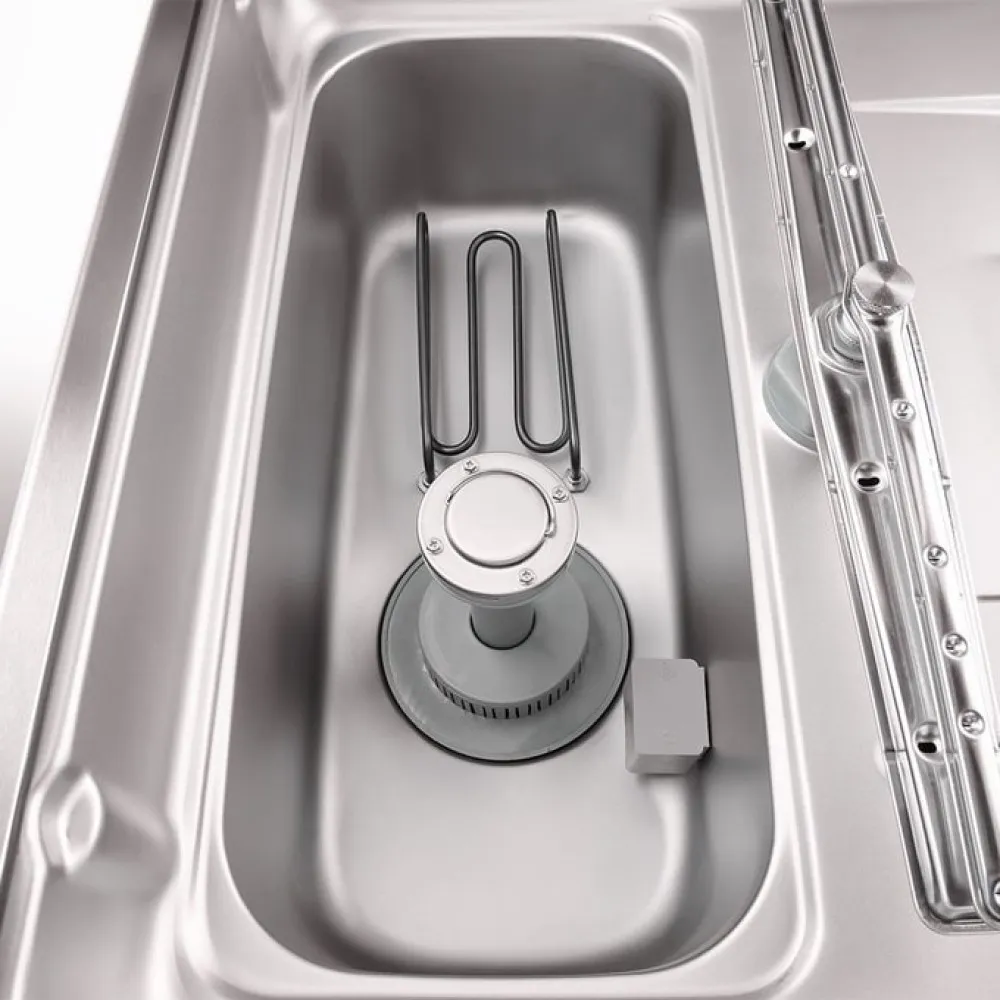
The operator lowers the hood, selects the cycle, and starts the machine. Water heats rapidly in the built-in boiler, and detergent and rinse aid are automatically dispensed. Two pairs of spray arms ensure full coverage, while temperature displays let staff monitor progress. Once the cycle completes, the hood rises, and the rack is removed, ready for the next load.
The stainless steel chamber and boiler resist corrosion, and the adjustable feet allow levelling on uneven floors. A water purifier should be fitted to prevent scaling, extending the life of the heating elements and spray arms.
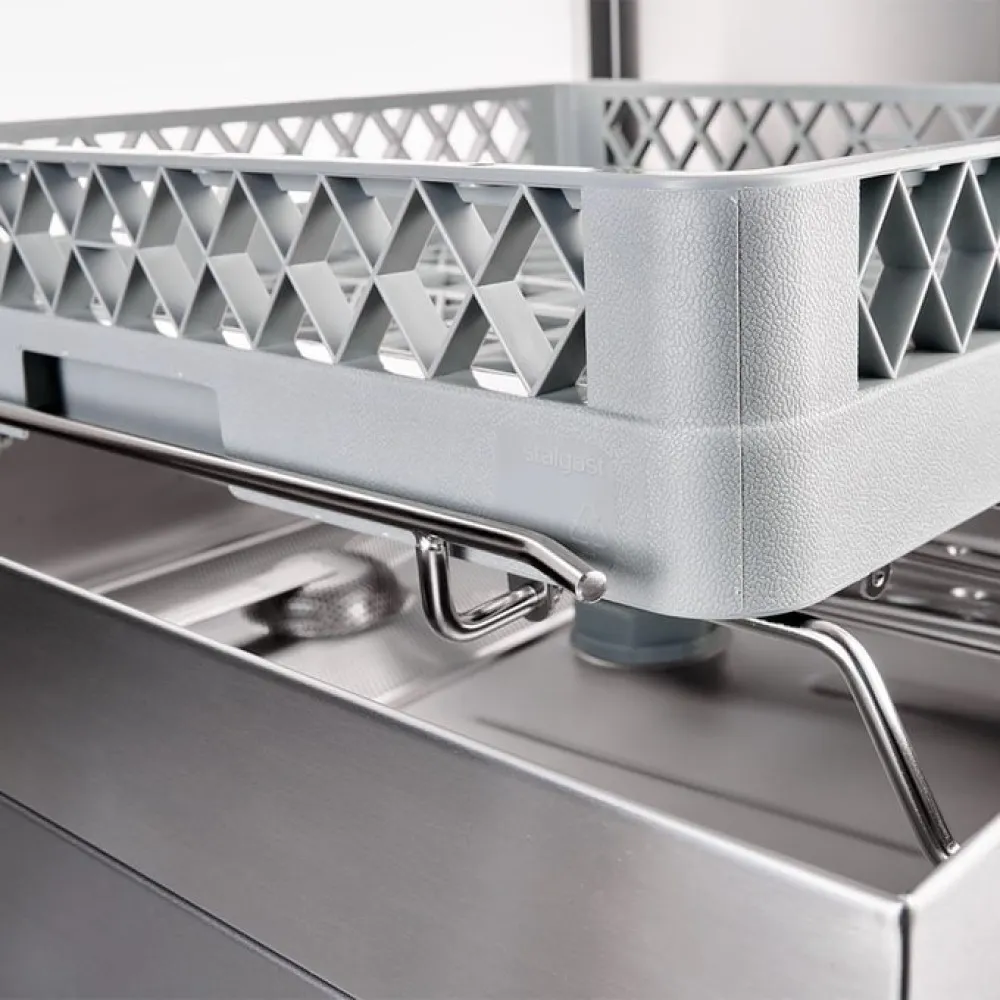
The 500 x 500 mm basket accommodates standard catering racks, and the 415 mm maximum dish height fits tall items like gastronorm trays. Three included racks—one for plates, one universal, and one for glassware—along with a cutlery container, organise different dish types without mixing them.
The 10.8 kW power rating requires a 400 V three-phase supply, typical for commercial kitchens with high-demand equipment. The 728 x 816 mm footprint fits under most worktops, while the 1505 mm height allows clearance for the hood to lift fully.
Cleaning involves wiping the chamber and spray arms after each shift to remove food debris. The detergent and rinse aid dispensers should be refilled regularly, and the water purifier checked to maintain performance.
The dishwasher is designed for trays, glassware, cutlery, and plates, with cycle times of 120 or 180 seconds depending on soil level. Water consumption is 2.5 litres per cycle, reducing waste without compromising cleanliness.