More from this brand
Technical data
| Attributes | |
| ARTICLE | 207160 |
| SIZE L/W/H | 155 |
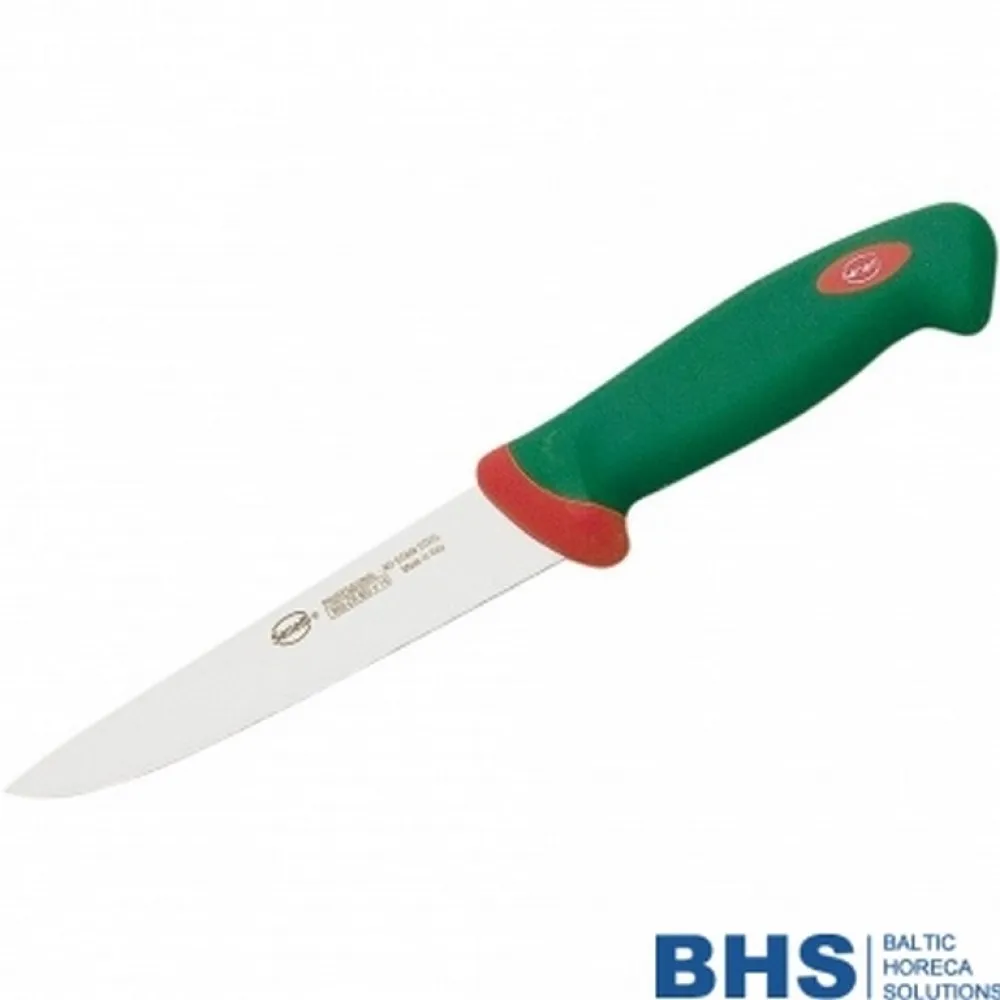
A boning knife separates meat from bone with a narrow, flexible blade that follows the contours of joints and cartilage. The thin profile reduces resistance, letting the blade glide along the bone without tearing the meat, while the pointed tip reaches into tight spaces where a wider blade would bind. Flexibility in the steel allows the edge to bend slightly, adapting to the shape of ribs, vertebrae or poultry carcasses without forcing the cut. This method preserves the integrity of the meat, leaving minimal waste and a cleaner presentation on the worktop.
To use the knife, grip the handle firmly with the thumb and forefinger pinching the blade's heel for control. Start the cut at the joint or natural seam, using short, precise strokes to follow the bone. The pointed tip acts as a guide, tracing the curve of the bone while the edge slices through connective tissue. For larger cuts, such as a leg of lamb, the blade's length lets the operator work in a single pass, reducing fatigue. The weight of the knife is concentrated in the handle, keeping the blade light and responsive to small adjustments.
The blade is made of hardened steel with a Rockwell hardness of 54-56 HRC, balancing sharpness retention and resistance to chipping. The handle combines two types of plastic: a softer, textured grip near the blade for secure hold, and a firmer material along the spine for durability. This construction prevents slippage when the handle is wet or greasy, a common condition in professional meat preparation.
The 16 cm blade length is sized for medium to large cuts, such as poultry, pork loins or lamb shoulders. It is not a filleting knife for fish, nor a cleaver for chopping through bone, but a specialised tool for separating meat from bone without damaging either. The hardness rating ensures the edge stays sharp through repeated use, while the flexibility prevents the blade from snapping under lateral pressure.
Cleaning follows from the materials: the stainless steel blade resists corrosion, but should be washed by hand immediately after use to prevent blood or fat from drying on the surface. The plastic handle can be sanitised with standard kitchen chemicals, though abrasive pads may wear the textured grip over time. The knife is not dishwasher-safe, as prolonged exposure to heat and detergent can degrade the handle's bond to the blade.
The Sanelli 155 is a single model with no variants. It is categorised under professional meat knives in the Stalgast catalogue.