More from this brand
Technical data
| Attributes | |
| ARTICLE | 239773 |
| WEIGHT | 2.68 kg |
| SIZE | ø360x(H)180mm |
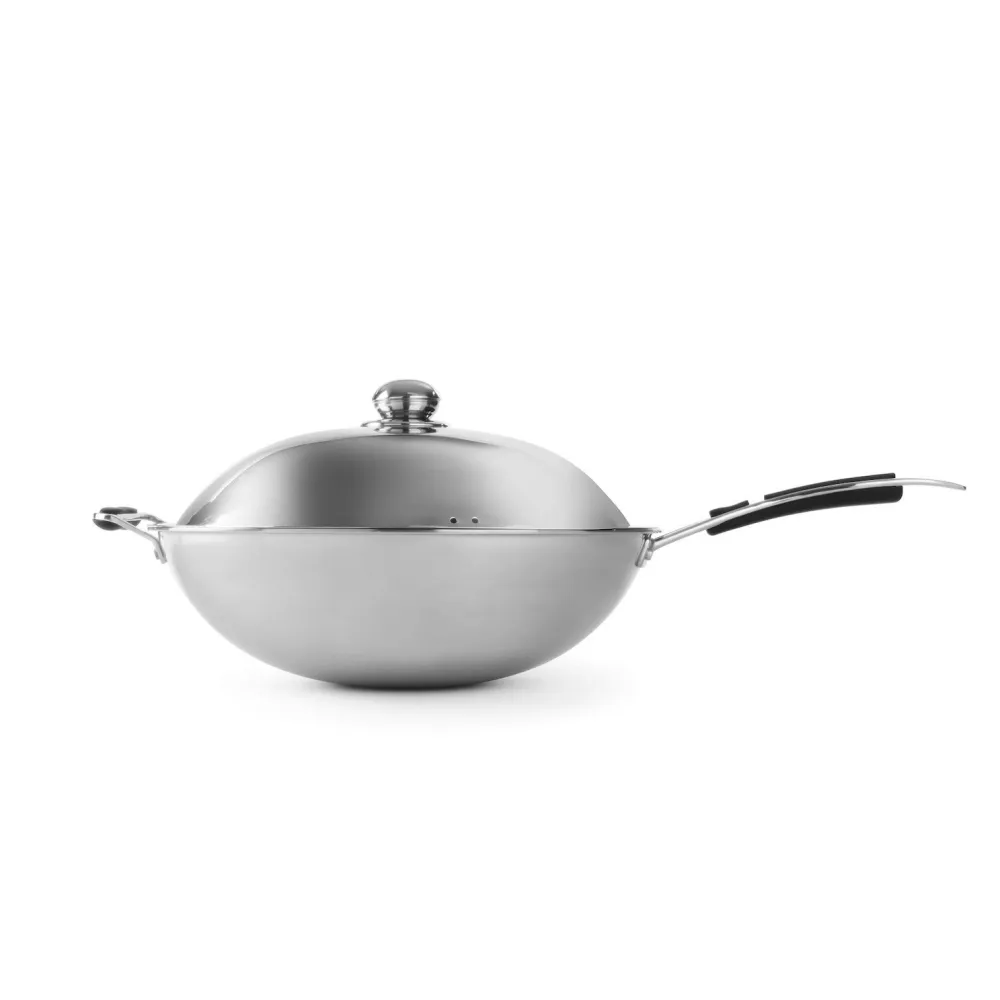
Made of 3-layer stainless steel with a soft handle.
An induction wok pan transfers heat directly from the induction hob into the metal base, creating a fast, responsive cooking surface without a flame or traditional element. The electromagnetic field beneath the hob generates currents in the pan's ferromagnetic base, heating it instantly while the hob itself stays cool.
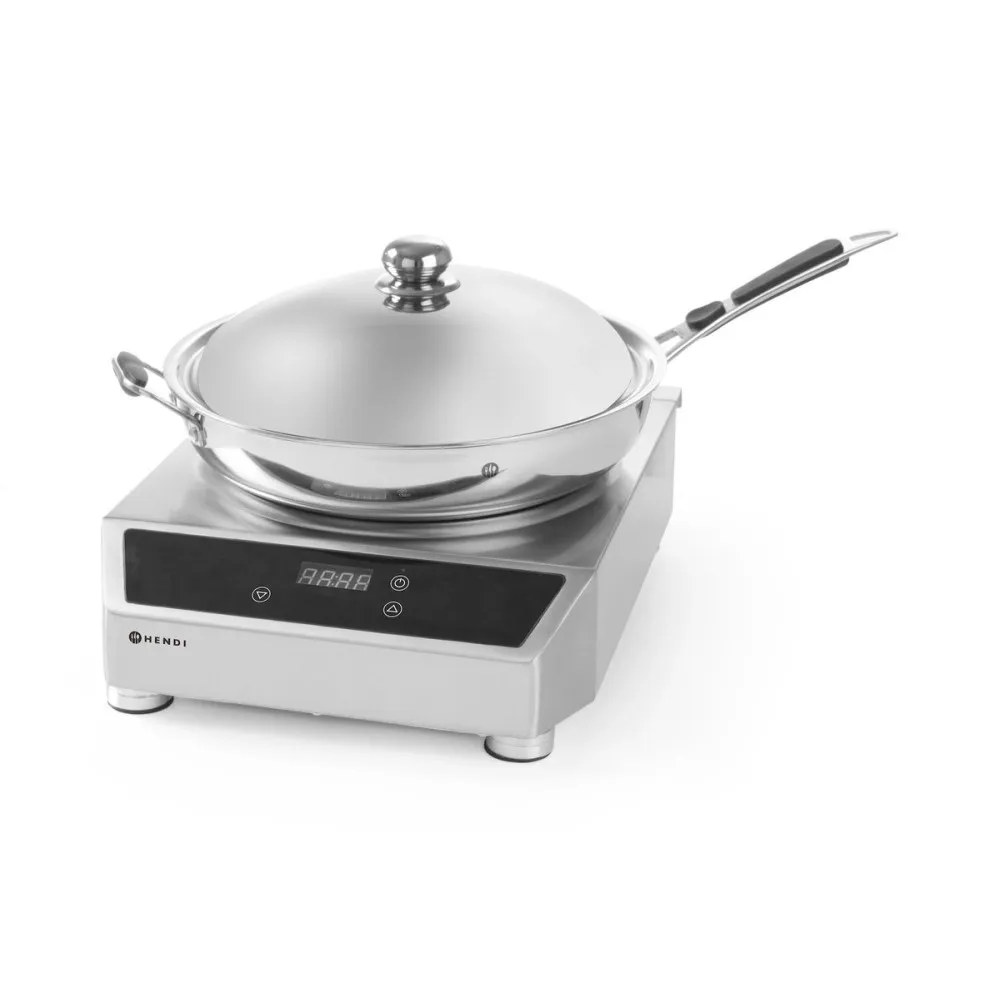
The operator places the wok pan on the induction wok stove, ensuring the base aligns with the hob's marked zone. The pan is then filled with oil or ingredients, and the stove's controls are set to the desired power level. As the pan heats, the operator can stir or toss ingredients continuously, adjusting the power setting as needed to maintain the correct temperature. Once cooking is complete, the pan is removed from the hob and the contents are served or transferred. The stainless steel lid can be placed over the pan to retain heat or steam ingredients during cooking.
The pan is constructed from stainless steel, chosen for its durability, resistance to corrosion and ease of cleaning. The base is designed to be compatible with induction hobs, ensuring efficient heat transfer. The included lid is also made of stainless steel, providing a secure fit to trap steam and heat.
The 360 mm diameter gives a broad cooking surface suitable for stir-frying large quantities of ingredients, while the 180 mm height allows for deep frying or tossing without spillage. The 2.68 kg weight makes the pan stable on the hob yet light enough to lift and manoeuvre when full. The pan is specifically designed for use with the HENDI induction wok stove 239766, ensuring a precise fit and optimal performance.
Cleaning involves washing the pan and lid with warm water and a mild detergent, using a non-abrasive cloth or sponge to avoid scratching the stainless steel surface. The pan should be dried thoroughly after washing to prevent water spots or corrosion. Regular inspection of the base ensures it remains free of scratches or warping, which could affect heat transfer efficiency.