More from this brand
Technical data
| Attributes | |
| ARTICLE | 513835 |
| SIZE L/W/H | 250x240mm |
| Temperature | Resistance to a maximum temperature of 100°C |
| COLOR | Green |
| NOTES | Suitable for washing in the dishwasher |
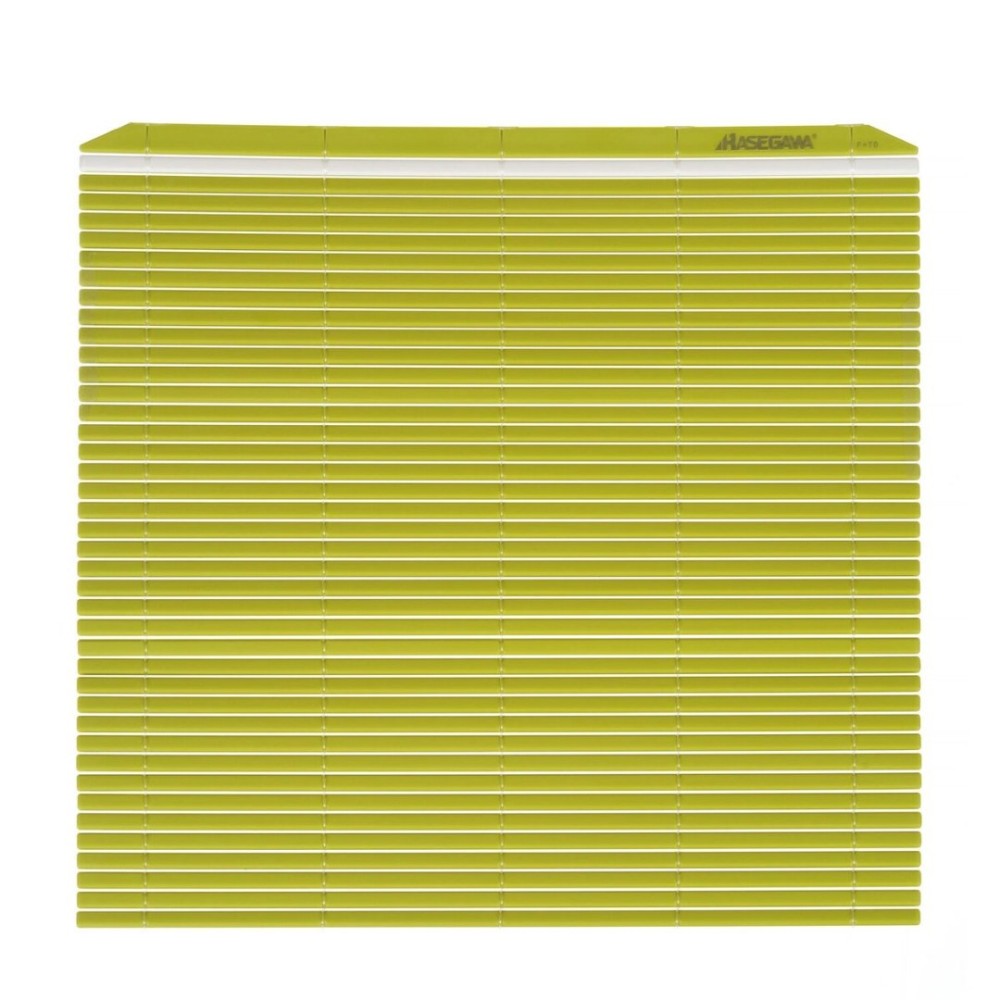
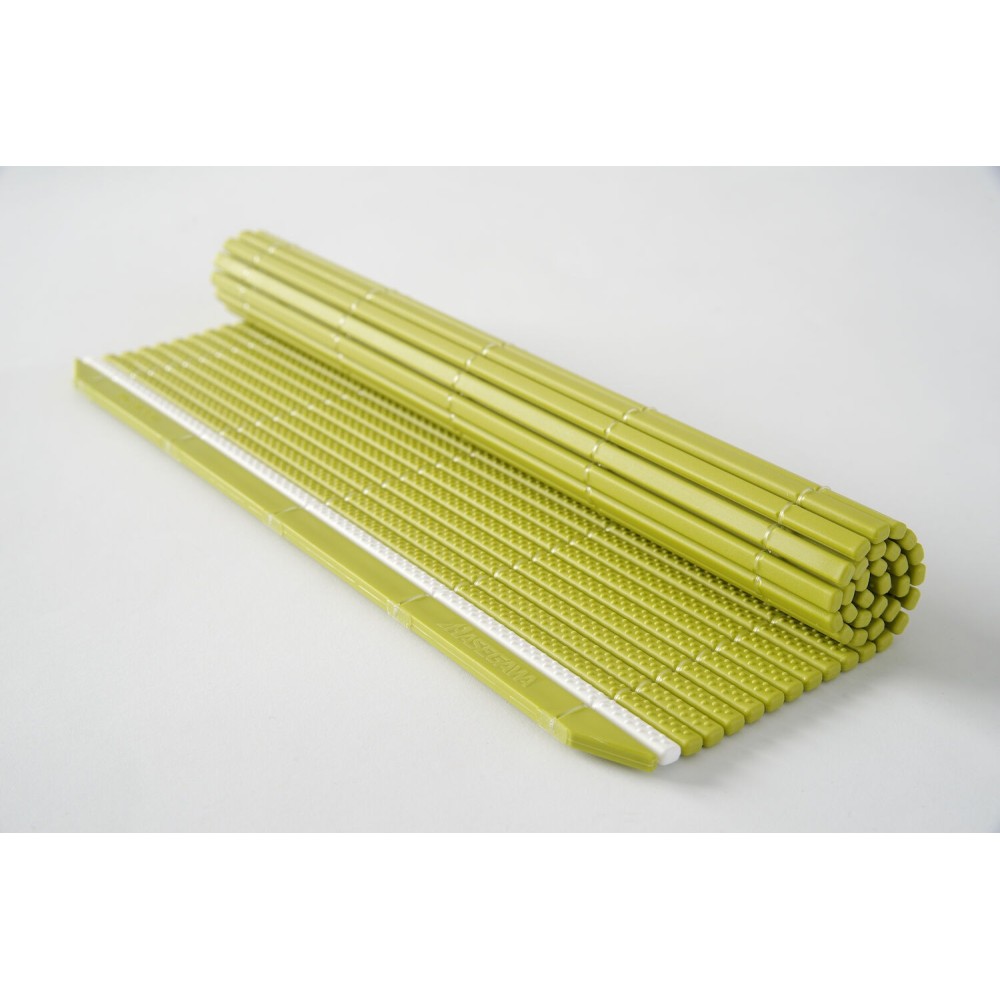
Designed for sushi rolling.
A sushi mat makisu forms the tight, even rolls that keep rice and fillings together without crushing. The mat's parallel slats create a flexible grid; when the operator presses and rolls, the grid bends into a cylinder, compressing the ingredients evenly from all sides. The gaps between the slats allow steam to escape so the rice does not stick, while the slats themselves shape the roll into a uniform log. Because the mat is not solid, it can be removed cleanly once the roll is set, leaving the sushi intact and ready to slice.
To use the mat, spread a sheet of nori on its surface, wet the slats lightly to prevent sticking, then layer the rice and fillings. Lift the near edge of the mat, fold it over the ingredients, and press gently while rolling the mat forward. The slats guide the roll into a consistent diameter from end to end. When the roll is complete, slide the mat away; the gaps ensure no rice is pulled off with it. The mat can then be rinsed and stored flat or hung to dry.
The HENDI makisu is made of polypropylene, a material that resists moisture and does not warp when exposed to heat. Its green colour distinguishes it from other mats in a busy kitchen. The slats are spaced to allow steam to vent while still providing enough support to shape the roll. An antibacterial treatment reduces the risk of cross-contamination between batches.
The mat measures 250 mm by 240 mm, a size that accommodates standard nori sheets and produces rolls suitable for both individual portions and larger platters. Its resistance to temperatures up to 100 °C allows it to be washed in a dishwasher, where the heat and detergent remove residues without damaging the material. No additional foil is required during rolling, as the polypropylene surface is non-stick when lightly wetted.
Cleaning is straightforward: rinse the mat under warm water to remove rice particles, then place it in the dishwasher or wash it by hand with mild detergent. The material dries quickly and can be stored flat or hung to prevent bending. The antibacterial properties remain effective through repeated washing, provided the mat is dried thoroughly between uses.