More from this brand
Technical data
| Attributes | |
| ARTICLE | 716112 |
| POWER | 2x2.6 |
| SIZE L/W/H | 800/ 450/ 900 |
| VOLTAGE | 400/ 2N |
| WEIGHT | 18 |
An electric stove heats food by passing current through resistance elements beneath a flat metal surface. The elements convert electricity into heat, which spreads evenly across the worktop. This method gives instant control over temperature and eliminates open flames, making it safer for busy kitchens where staff move quickly between tasks.
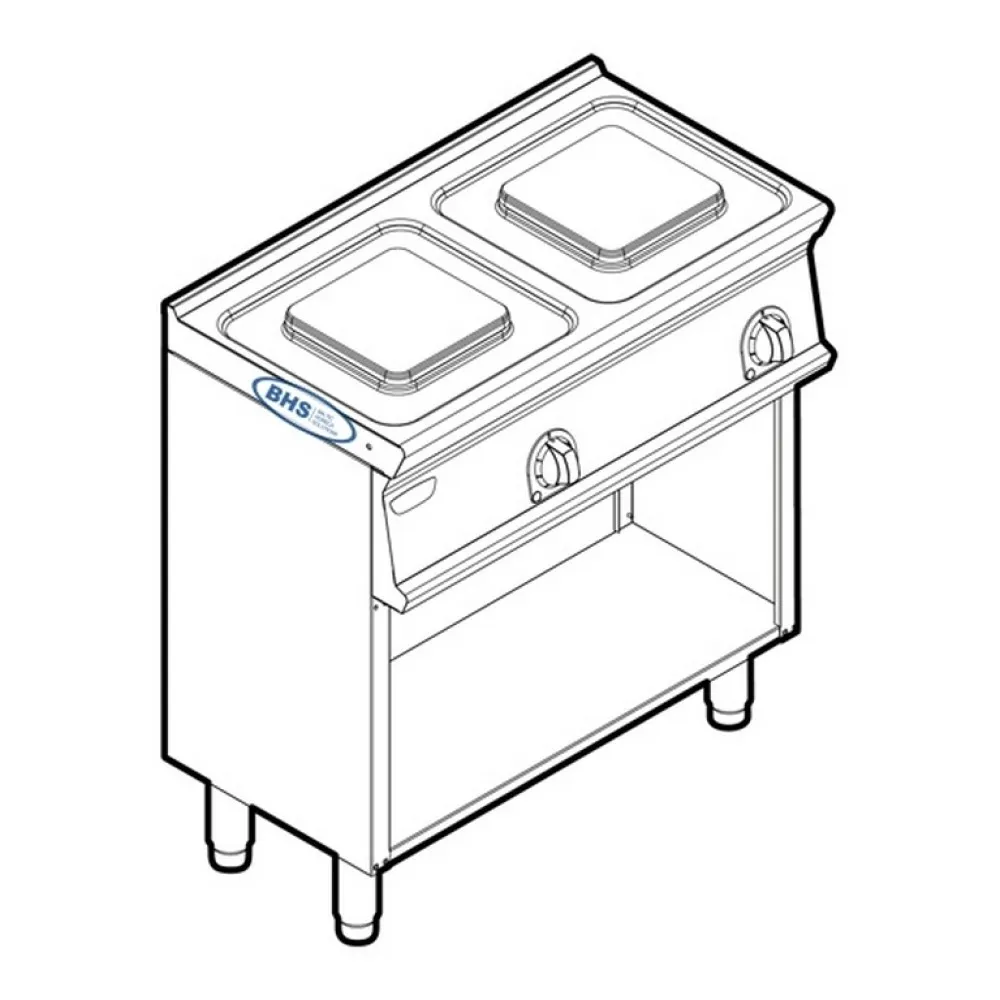
The PCM8FE7 stove has two separate heating zones. Each zone is powered by its own 2.6 kW element, allowing the operator to set different temperatures for different pans. The operator places a pan on the zone, turns the control knob to the desired setting, and the element heats the pan from below. When the pan is removed, the element cools rapidly, reducing the risk of accidental burns.
The stove is built from stainless steel, chosen for its resistance to corrosion and ease of cleaning. The worktop measures 800 mm across, providing space for two large pans side by side. The 400 V two-phase supply means the stove connects to a dedicated circuit that can handle the 5.2 kW load without overloading the kitchen's electrical system. At 18 kg, the unit is light enough to be moved by two people but heavy enough to stay stable on the floor during use.
Controls consist of two rotary knobs, one for each heating zone. Each knob adjusts the power output of its element, giving the operator precise control over the cooking temperature. The stove does not include a timer or digital display, relying instead on manual adjustment and visual monitoring.
The 800 mm width fits standard worktop depths and allows the stove to be installed alongside other catering equipment without overcrowding. The 450 mm depth leaves room for rear clearance, and the 900 mm height matches most professional work surfaces, so the operator can work comfortably without bending.
Cleaning involves wiping the stainless steel worktop after each service to remove spills and food debris. The elements are sealed beneath the surface, so they do not require separate cleaning. The stove has no internal parts that need regular maintenance beyond checking the electrical connections for signs of wear.