More from this brand
Technical data
| Attributes | |
| ARTICLE | REF1550X |
| DIAMETER | 500mm |
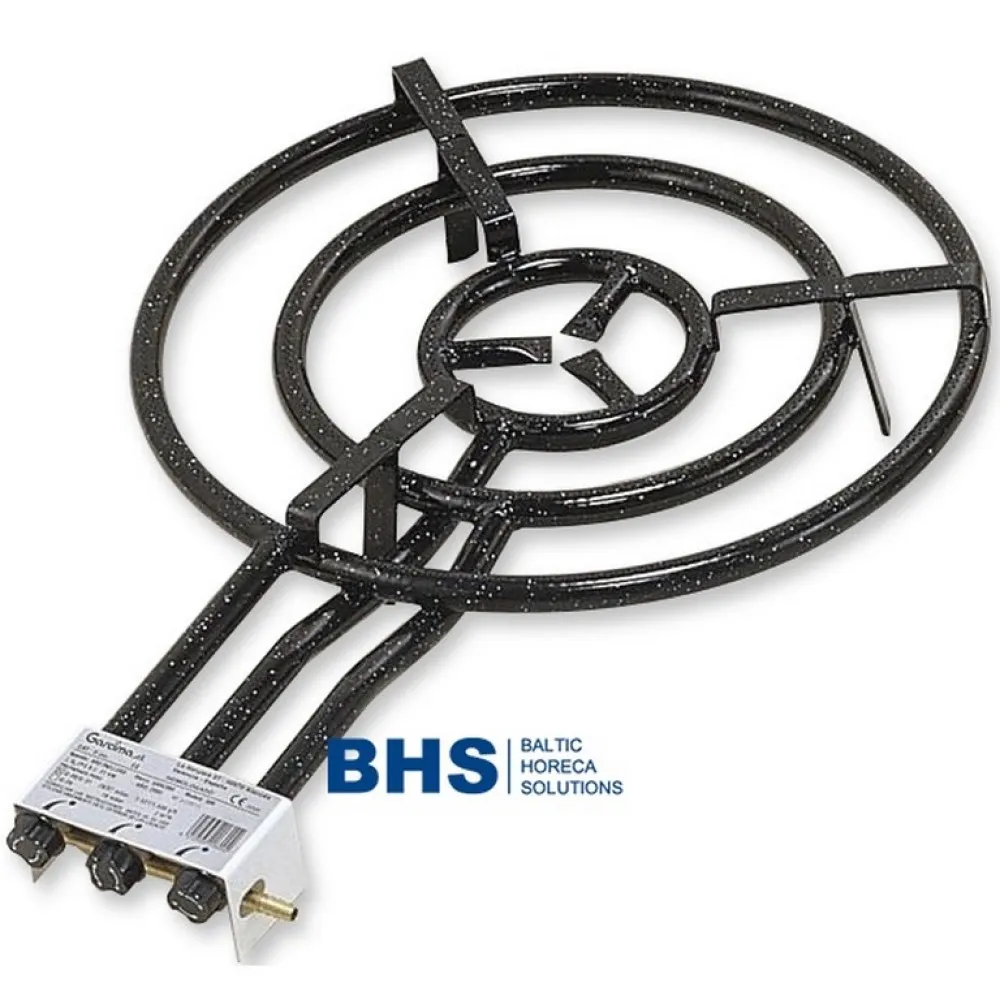
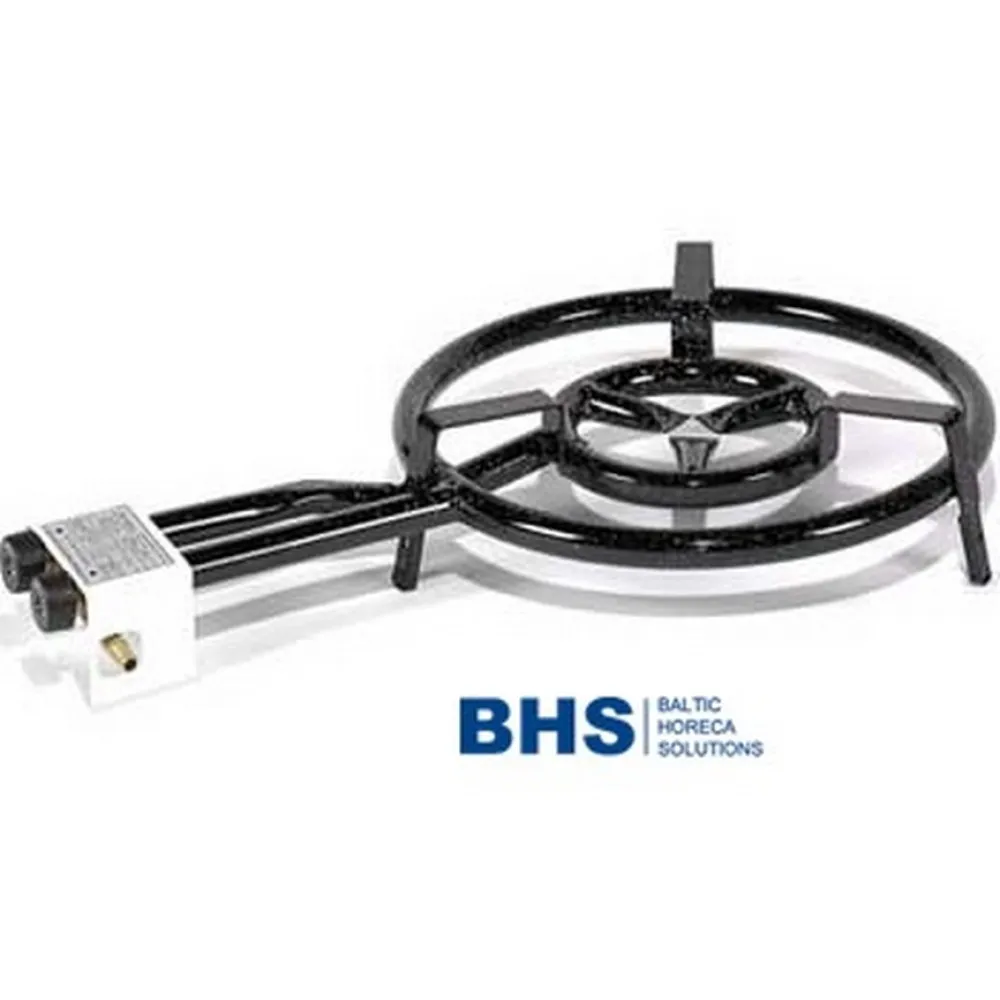
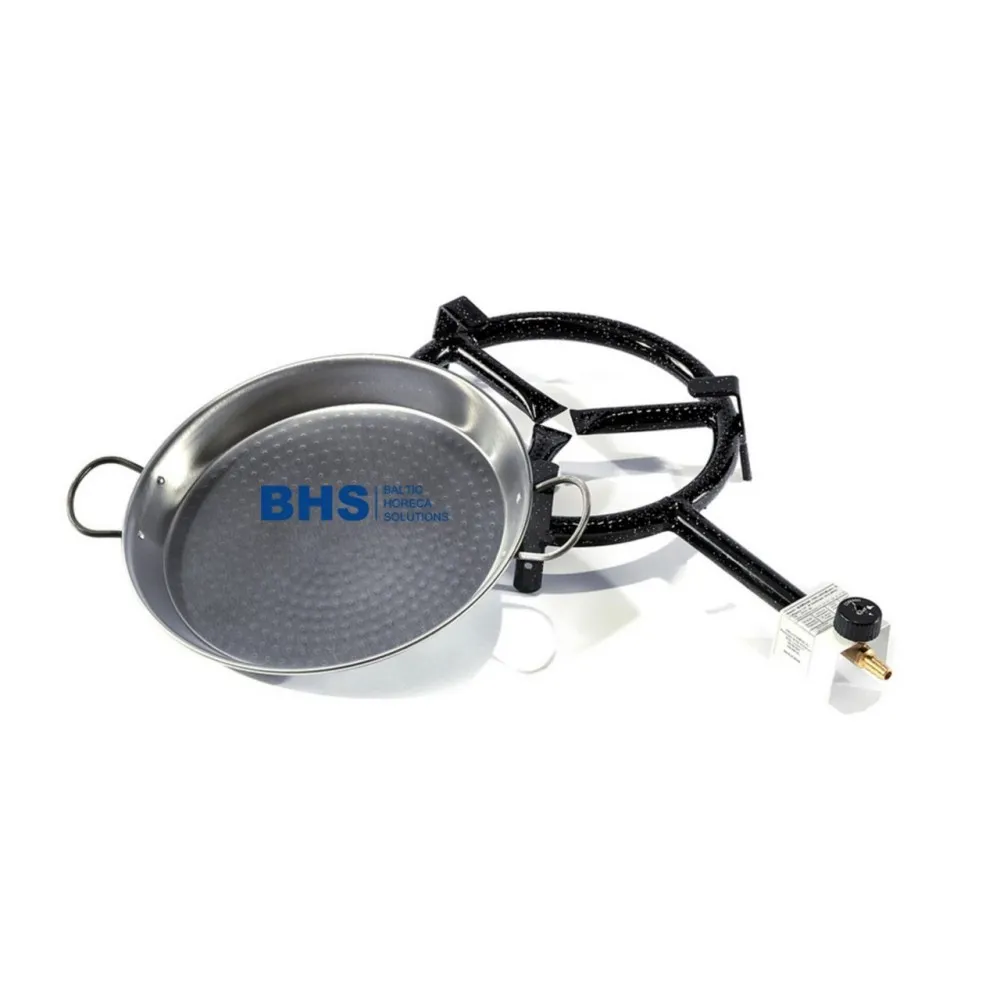
Gas burner produced from cold laminated steel.
A gas burner designed for outdoor paella and large-format cooking spreads heat evenly across a wide, shallow pan. The open flame beneath the pan heats the metal directly, transferring energy without the lag of an enclosed oven or the unevenness of a domestic hob. This method keeps the base of the pan at a consistent temperature, essential for dishes that rely on a crisp, golden crust without scorching or undercooking. The flame's intensity can be adjusted to control the cooking speed, allowing the operator to sear, simmer or hold the dish at serving temperature without moving it to another appliance.
The sequence begins by positioning the burner on a stable, level surface away from flammable materials. The gas supply is connected, the valve opened and the flame ignited. The pan is placed on the burner's raised rim, which centres it and prevents slipping. Once the pan is loaded, the flame is set to the required level and monitored throughout cooking. After use, the flame is turned off, the gas supply disconnected and the burner left to cool before cleaning or storage.
The PAELLA 500 is constructed from cold laminated steel, a process that strengthens the metal and resists warping under repeated heating and cooling. The surface is protected by an enamel coating, which prevents rust and makes cleaning easier. The 500 mm diameter provides a large, flat cooking area that matches the size of professional paella pans and other wide, shallow vessels used in outdoor catering.
The burner is intended for outdoor use, where ventilation is unrestricted and the risk of gas accumulation is minimised. Its weight and construction make it suitable for temporary setups at events, markets or outdoor kitchens, where it can be moved and stored when not in use.
Cleaning involves wiping the enamel surface with a damp cloth to remove food residue and grease. The gas connection and valve should be checked periodically for leaks or damage, and the enamel coating inspected for chips that could expose the steel beneath.