More from this brand
Technical data
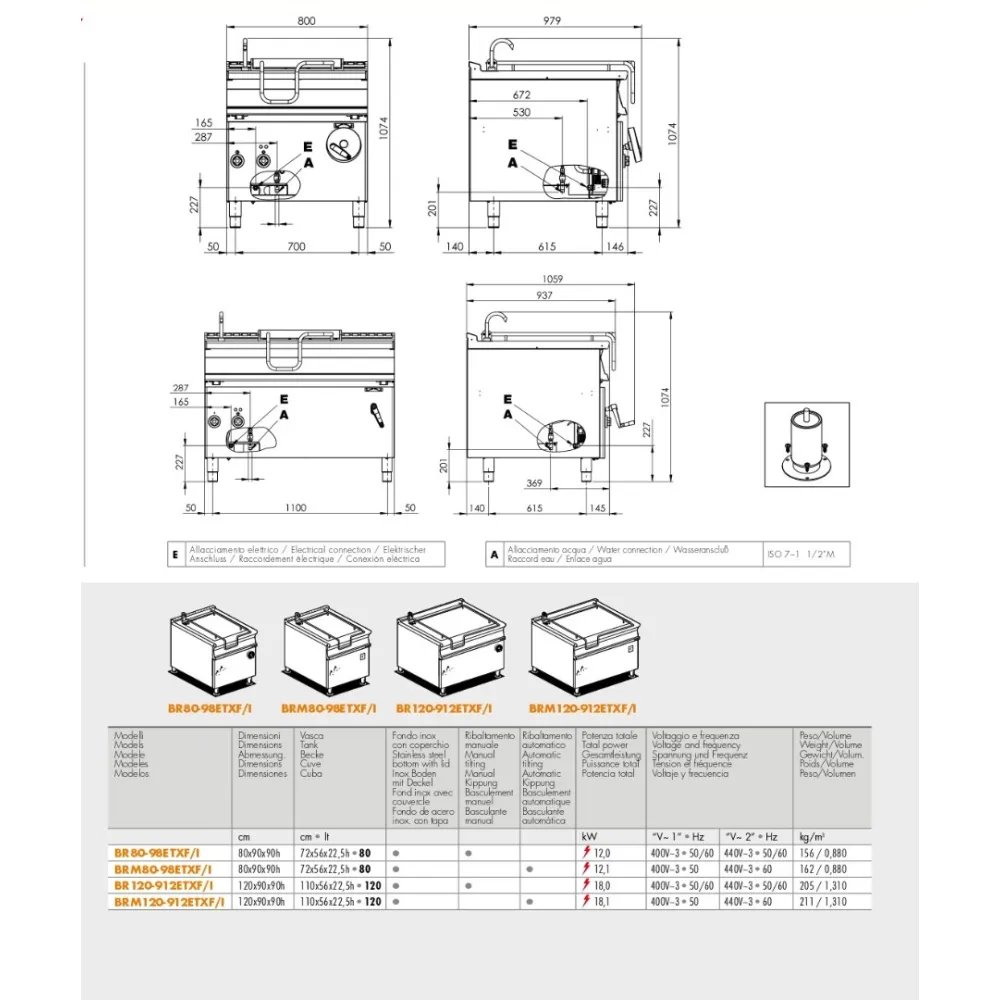
| Attributes | |
| ARTICLE | 09070835X |
| POWER | 12 kW |
| SIZE L/W/H | 800x900x900 mm |
| VOLTAGE | 400V-3-50/60 Hz |
| VOLUME | 80 l |
| WEIGHT | 156 kg |
Tank 72x56x22 cm
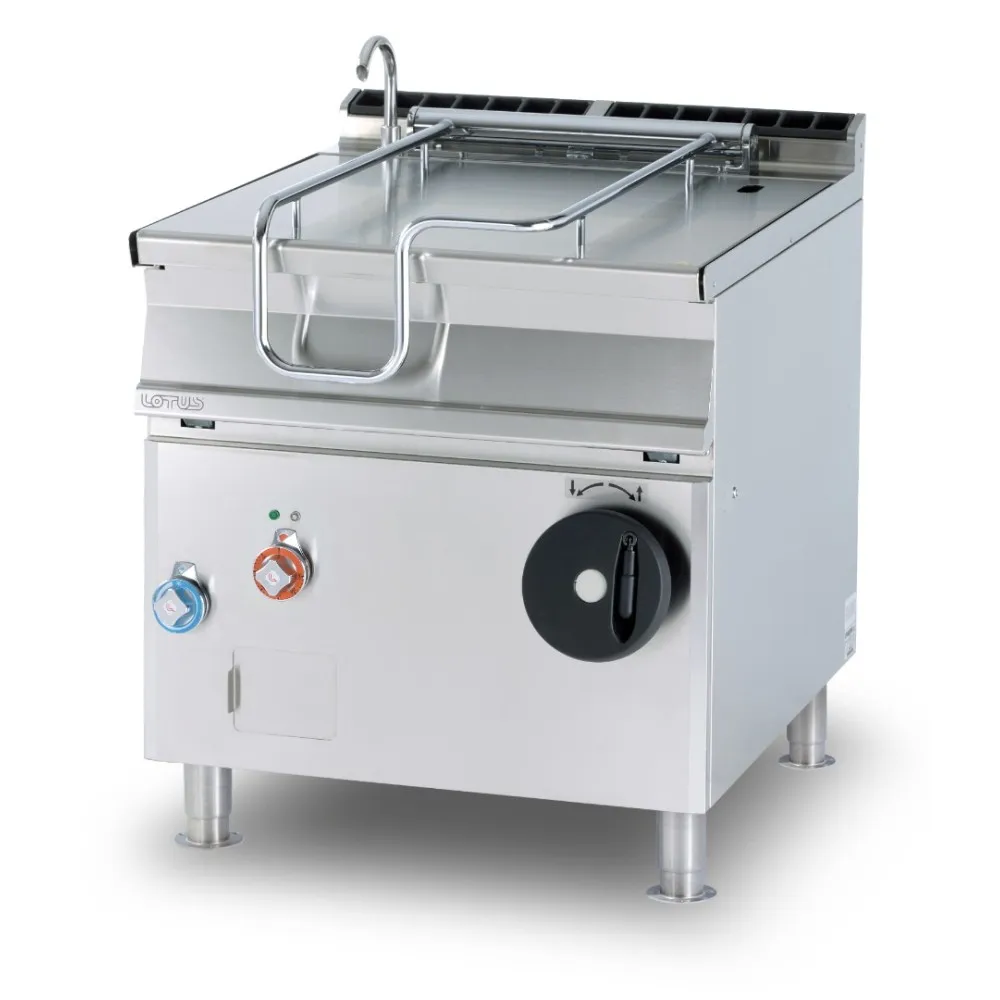
A braising pan combines a shallow, wide cooking surface with a tight-fitting lid to hold steam. The heat travels from an electric element through a water-filled jacket that wraps around the pan. This indirect heating keeps the temperature even across the entire base, so food browns without scorching and liquids simmer without hot spots. The steam trapped inside the lid softens tough cuts and keeps delicate items moist, making the pan equally useful for searing, stewing, poaching and shallow frying.
The operator loads ingredients directly into the pan, sets the thermostat and starts the element. A manual tilt wheel at the front lowers the pan to drain liquids or transfer finished dishes to serving containers. The lid stays closed during cooking to retain steam, then lifts clear for stirring or adding ingredients. Once the pan is empty, the tilt mechanism returns it to the upright position for the next batch.
The unit is fabricated from CrNi 18/10 AISI 304 stainless steel with a Scotch-Brite satin finish. The worktop is 2 mm thick, rounded at the edges, and includes a rear splash-back. Chromed details protect high-wear areas and the control knobs carry an IPX5 waterproof rating. A 50 L tank built from AISI 304 with an AISI 316 bottom supplies the water jacket. Adjustable flanged feet level the unit on uneven floors.
The front control panel houses the thermostat and power switch. Removing the panel gives access to all serviceable parts for routine maintenance.
A 12 kW load requires a 400 V three-phase circuit, the standard supply for heavy-duty catering equipment. The 80 L volume allows large batches of braised meats, sauces or vegetables to be prepared at once. At 156 kg, the pan is moved with a trolley or pallet truck. The 800 × 900 × 900 mm footprint fits a standard worktop space in a professional kitchen.
Cleaning involves draining the water jacket, wiping the interior with a non-abrasive cloth and rinsing the lid and splash-back. The front panel is removed to reach the element and thermostat for periodic inspection.
An indirect version of the same model is available for kitchens that prefer a separate heat exchanger. The automatic water-charge option fills the jacket without manual intervention.
The catalogue places this model in the professional electric kettle range, designed for high-volume braising, simmering and poaching tasks.