

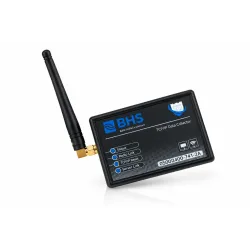
Remote Temperature and Humidity Monitoring Systems
Refrigeration equipment is only as reliable as the products stored inside it. A remote monitoring system measures temperature and air humidity in your units continuously — 24/7 — and alerts you immediately if readings move outside the permitted range. You learn about a problem within minutes, rather than the next morning when the stock already has to be written off.
Where it is used
The system can be connected to virtually any refrigeration unit, regardless of manufacturer or age:
- refrigerators and upright freezers
- cold rooms and freezer rooms
- retail display cabinets, salad and meat displays
- refrigerated preparation counters and freezer counters
- wine cabinets and climate cabinets
- blast freezers and blast chillers
- warehouses, production areas, drying and ripening chambers
- refrigerators in pharmacies, laboratories and medical facilities
What the system gives you
- Real-time supervision — temperature and humidity at every point visible on your phone or computer at any moment and from anywhere.
- Alarm notifications — an alert by e-mail, SMS or mobile app when the temperature exceeds the set limit, a door has been left open or the power has failed.
- Automatic data logging — measurement history is stored and available as charts and reports. No more paper logbooks to fill in.
- HACCP compliance — ready-made reports for food safety requirements and inspections by supervisory authorities.
- Loss prevention — an early warning about a compressor, fan or door seal problem lets you save the stock and avoid an expensive repair.
- Energy and equipment life savings — the data shows which unit is running under overload or defrosting too frequently.
BHS handles full system programming and implementation
BHS specialists do not only supply the equipment — we also programme it and adapt it specifically to your site. Individual temperature and humidity ranges, defrost period exceptions, alarm delays and recipient lists are set for each unit, so that the system warns about real problems instead of generating unnecessary signals. We install the sensors, configure the controllers and data transmission, prepare report templates and train your staff to work with the system.
Contact BHS and we will prepare a solution matched to the number of units, the size of your site and your industry requirements.
How the system works
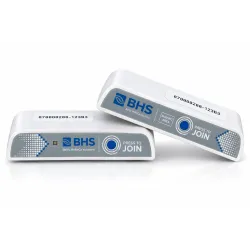
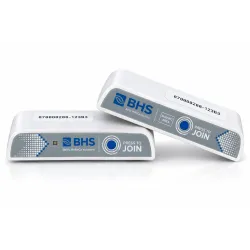
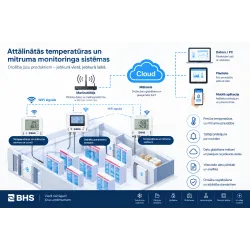
A temperature sensor, or a combined temperature and humidity sensor, is placed at every monitored point. The sensors pass the data to a data concentrator or directly to a cloud platform, using a wireless connection or a wired solution — depending on the layout of the site and the existing infrastructure. Data is recorded at a set interval (typically between 1 and 15 minutes) and is available in a web environment or a mobile app.
Sensor types and applications
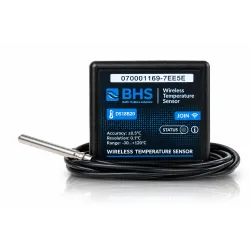
- Air temperature sensors — for display cabinets, refrigerators, cold rooms and room climate.
- Product simulation (glycol) sensors — show the actual product temperature rather than brief air fluctuations during door openings or defrost cycles.
- Low-temperature probes — for freezers and blast freezers down to deep sub-zero temperatures.
- Combined temperature and humidity sensors — for wine cabinets, ripening chambers, vegetable and flower storage, and warehouses.
- Additional detectors — door opening contacts, power failure monitoring, water leak detectors.
Alarm logic
An upper and a lower limit value is defined for each point, together with a delay time — how long a deviation may continue before a notification is sent. This prevents false alarms during a defrost cycle or while goods are being loaded. Several escalation levels can be created: the first notification to the shift supervisor, a repeat notification to the site manager or the service team. The system also records who acknowledged an alarm and when.
Reports and documentation
- Temperature charts for a selected period, separately for each unit
- Automatic daily, weekly or monthly reports by e-mail
- An alarm log with corrective action notes
- Data export in PDF and Excel format for inspections and internal audits
Suitable for
Restaurants, cafés and catering businesses, shops and supermarkets, meat and fish processing, patisseries and bakeries, hotels, wholesale and logistics warehouses, pharmacies and medical institutions, wine shops and restaurant wine cellars.
The BHS range of services
- Site survey — we assess the number of units, their types, their layout and the coverage options.
- Solution proposal — the number and type of sensors and the system configuration to match your budget.
- Installation — sensors fitted into the refrigeration units without damaging their structure or warranty.
- Programming and configuration — limit values, delays, user rights, notification recipients, report templates.
- Staff training — working with the app, acknowledging alarms, preparing reports.
- Maintenance and service — system checks, sensor replacement, configuration changes, expansion with new units.
The system can be expanded at any time — starting with a few of the most critical points and gradually adding the remaining units, branches or sites into one shared overview.