More from this brand
Technical data
| Attributes | |
| ARTICLE | CO-SOCTipe300soc |
| POWER | 3 kW |
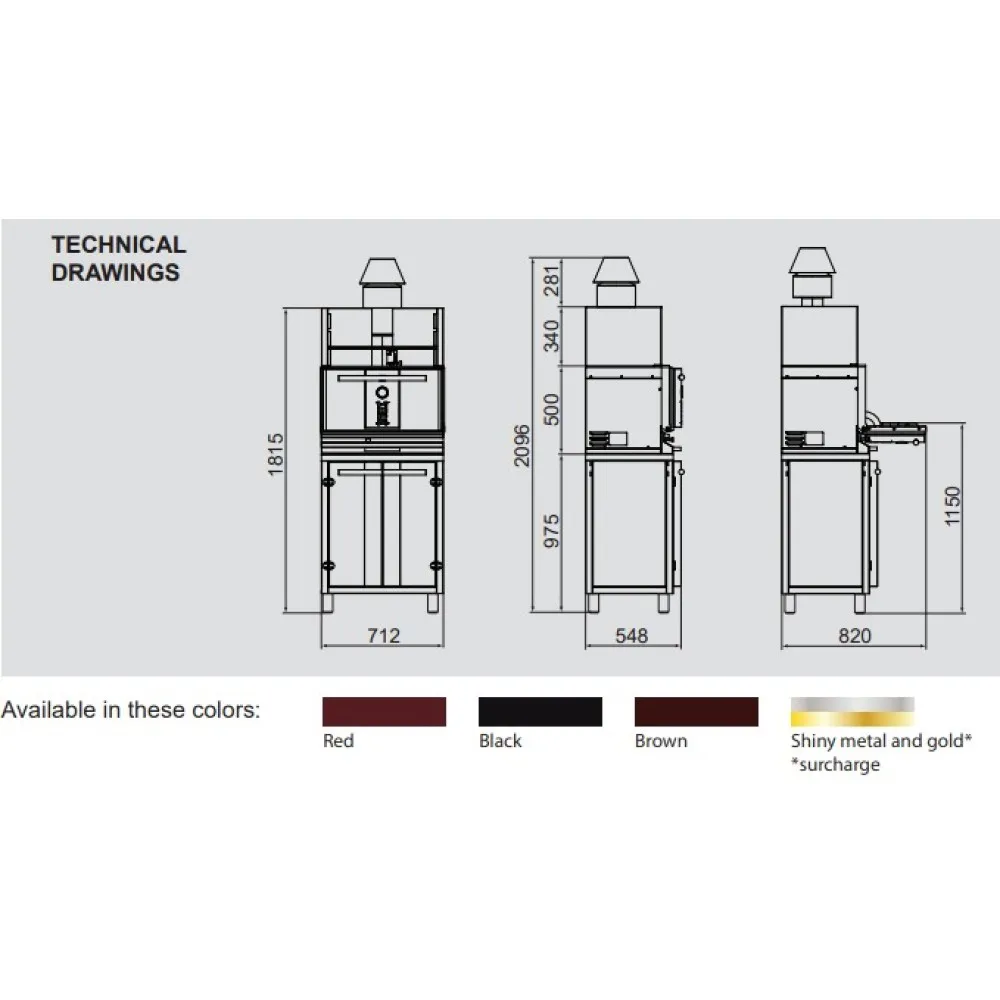
| SIZE L/W/H | 712 / 548 / 2096 Grill size 380x570 |
| Temperature | 250 - 350 °C |
| WEIGHT | 172 kg |
| CAPACITY | 40 trays / 24 hours |
| NOTES | Coal consumption - 3 - 6 kg |
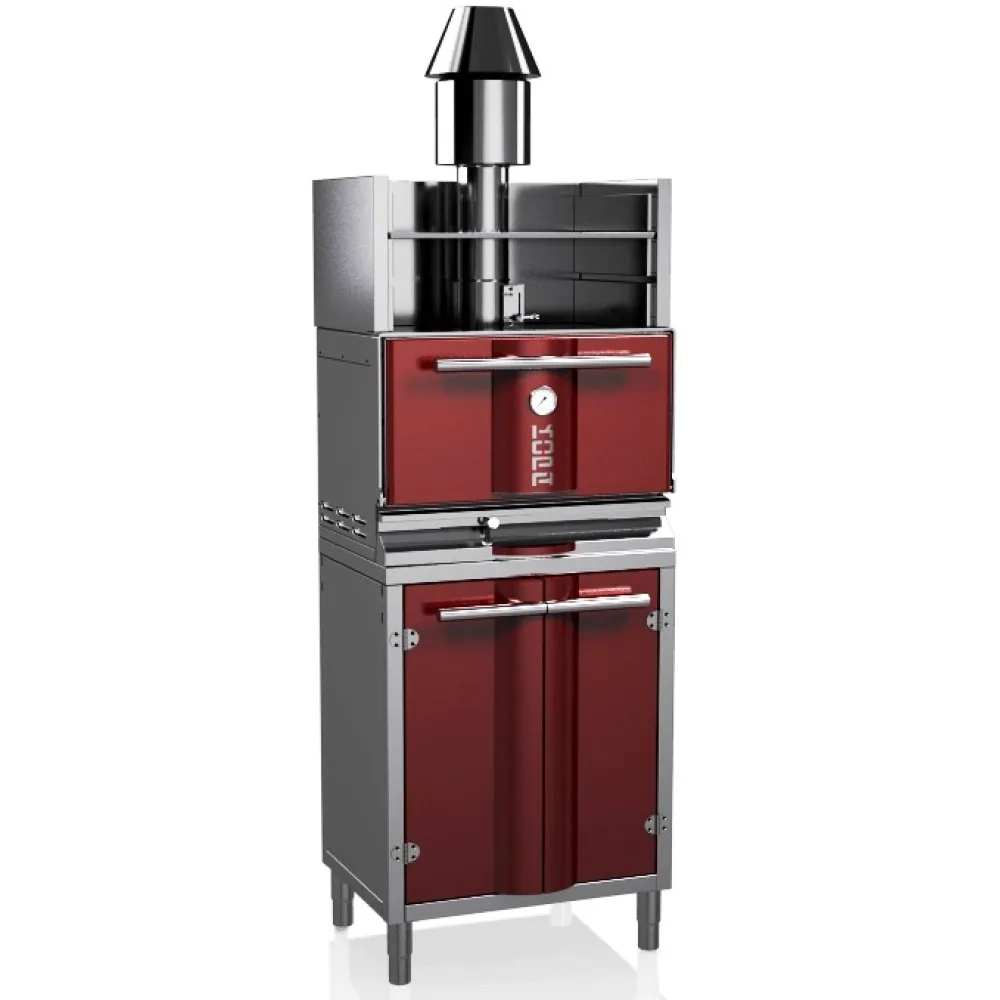
Charcoal Oven - Grill
A charcoal oven uses radiant heat from burning coal in a sealed chamber, reaching temperatures beyond an open grill's range. Thick refractory steel walls reflect and retain heat, cooking food with direct infrared radiation instead of hot air. This approach shortens cooking times and boosts throughput, enabling the oven to manage 40 trays in a day's service.
The SOC Type 300soc includes a stand that provides storage for utensils and charcoal. A two-level stainless-steel heated rack above the main chamber keeps cooked food warm, allowing the grill to stay free for new batches.
To use, fill the lower tray with 3 to 6 kg of charcoal and ignite it. Once the coal is lit, adjust the air vents to reach temperatures between 250 and 350 °C. Place food on the grill or in pans, close the door, and check the internal temperature with the built-in gauge. The exhaust system removes smoke at a rate of 2500 m³/h, maintaining clear kitchen air.
Built from durable refractory steel, the oven resists repeated heating and cooling. The main chamber measures 380 × 570 mm, with an overall size of 712 mm wide, 548 mm deep, and 2096 mm high. Four legs or optional wheels raise the unit to a practical height. The 172 kg weight ensures stability but requires two people or a trolley for moving.
Controls are simple: a single air-intake damper on the front adjusts the burn rate and temperature. The 3 kW electrical connection powers the exhaust fan and optional lighting, not the coal fire.
The 250–350 °C range is suited for grilling steaks, fish, and vegetables, as well as pan cooking. The oven's capacity supports continuous service in a busy kitchen.
Cleaning involves removing ash after each use, wiping the stainless-steel rack with a damp cloth, and occasionally scraping the refractory walls to clear carbon deposits. The exhaust duct should be checked monthly to ensure proper airflow.