More from this brand
Technical data
| Attributes | |
| ARTICLE | 300ST |
| POWER | 1.1 kW |
| SIZE L/W/H | 615 x 585 x 960 mm |
| VOLTAGE | 400V |
| WEIGHT | 61.5 kg |
| RPM sec | 1.400 rpm |
| NOTES | Sliding part dimensions 270x280mm |
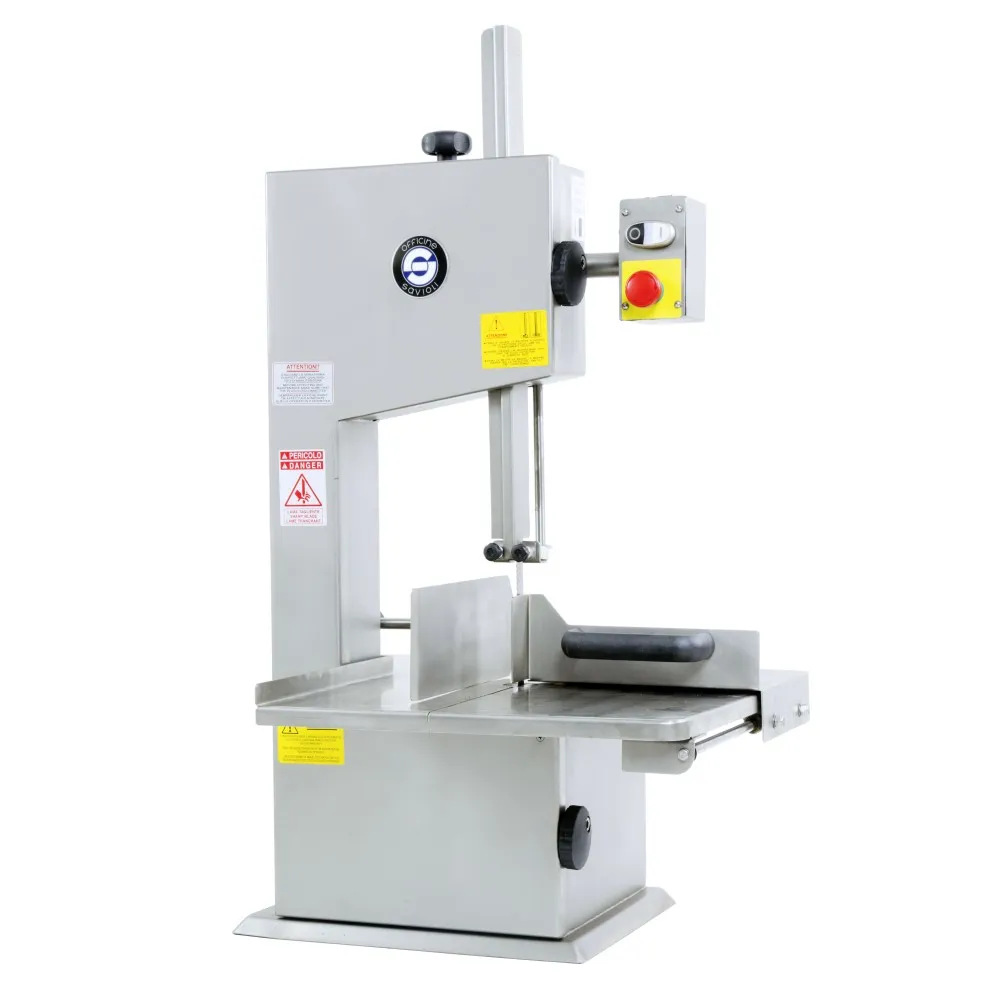
Used to cut frozen meat/fish and bones. The strong carrying structure is in aluminium fusion with non-scratch epossidic powder painting. Easy to clean and safe to use. Professional use. Suitable for butcheries, fishshops, hotels/restaurants’ kitchens and supermarkets
This bone saw is designed to cut through dense bone and frozen meat using a continuous-loop serrated stainless-steel blade. The blade operates over two flywheels, one powered by a ventilated motor, ensuring smooth and steady cutting without interruption. The operator positions the material on the stainless-steel work surface and moves it forward on the sliding part. A height-adjustable blade guide maintains precision, while a blade guard enhances safety. Magnetic sensors on the door and a safety control unit halt the blade immediately if the door is opened. An electromechanical brake inside the motor stops the flywheels quickly, improving safety during maintenance or blade changes.
The motor delivers 1.1 kW of power at 1400 rpm, suitable for continuous butchery operations. A low-voltage 24 V electrical panel manages motor and safety circuits, separating high voltage from the operator. Die-cast aluminium flywheels minimise vibration and wear, prolonging blade durability.
The saw measures 615 mm in width, 585 mm in depth, and 960 mm in height, making it compatible with standard worktop extractor hoods. Weighing 61.5 kg, it should be transported using a trolley or pallet truck. A 400 V three-phase supply is required for operation in commercial kitchens.
Key components, including the work surface, sliding part, and meat pusher, are constructed from AISI 304 stainless steel for corrosion resistance and ease of cleaning. The blade guide and guard are also stainless steel and adjustable to accommodate varying material thicknesses.
Routine cleaning involves wiping down the work surface, sliding tray, and blade guard after each shift. The blade is removed and cleaned separately. The low-voltage panel and motor housing should be dusted weekly to prevent overheating during extended use.