More from this brand
Technical data
| Attributes | |
| ARTICLE | 350FT |
| POWER | 2.2kW |
| SIZE L/W/H | 915 x 795 x 1770 mm |
| VOLTAGE | 400V |
| WEIGHT | 158 kg |
| RPM sec | 1.400 rpm |
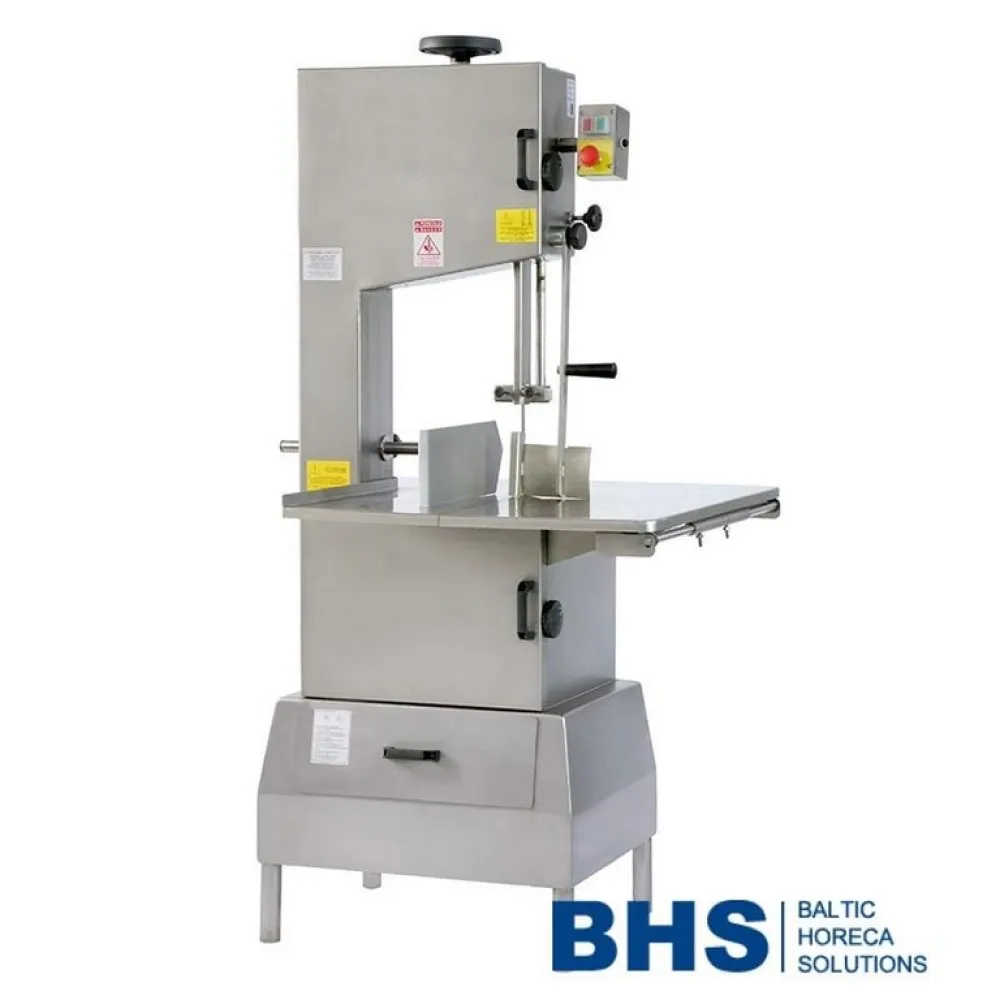
Used to cut frozen meat/fish and bones. The strong carrying structure is in stainless steel. Easy to clean thank to the removable flywheels (without any tools) and safe to use. Professional use. Suitable for meat and fish industry.
A bone saw slices through dense bone and frozen meat by driving a toothed blade at high speed. The motor spins the blade against the material, converting rotational force into a rapid cutting action that cleanly separates joints and cuts through cartilage without crushing the surrounding tissue. This method preserves the integrity of the meat and reduces waste compared to manual sawing or cleaving.
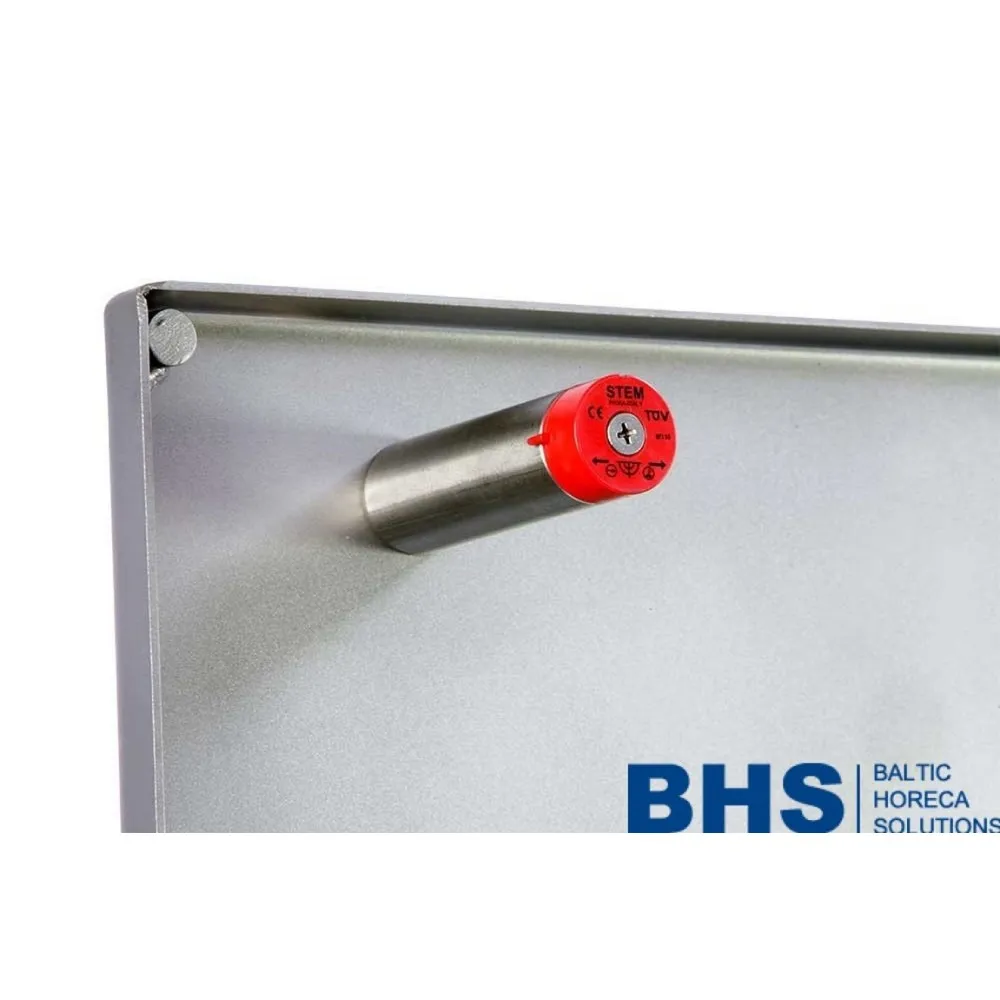
The operator places the meat on the fixed work surface, secures it with the meat pusher, and adjusts the portioning device to the desired thickness. The adjustable blade-guide keeps the cut straight while the blade protection prevents accidental contact. Proximity magnetic sensors detect the operator's hands and trigger the safety mechanics brake within milliseconds if the blade is approached too closely. The low voltage electrical panel isolates the controls from the 400 V supply, reducing the risk of electric shock during operation.
The unit is built from stainless steel AISI 304, which resists corrosion from blood and moisture and can be sanitised between uses. A removable sawdust drawer collects bone fragments and meat particles, simplifying cleanup. The 2.2 kW motor draws power from a three-phase 400 V circuit, providing the torque needed to maintain 1400 rpm under load. The 158 kg weight anchors the saw to the floor, preventing movement during heavy cutting, while the 915 mm width and 795 mm depth fit within a standard butchery worktop layout.
Controls include the main power switch, blade speed adjustment, and portioning device setting. The safety brake engages automatically when the sensors are triggered or when power is cut, stopping the blade in under a second. Regular maintenance involves emptying the sawdust drawer, wiping down the stainless steel surfaces with food-safe sanitiser, and checking the blade tension and guide alignment to ensure straight, consistent cuts.