More from this brand
Technical data
| Attributes | |
| ARTICLE | INS7H |
| SIZE L/W/H | 200 x 690 x 240 mm |
| VOLUME | 7 L |
| WEIGHT | 27 kg |
| NOTES | stainless steel |
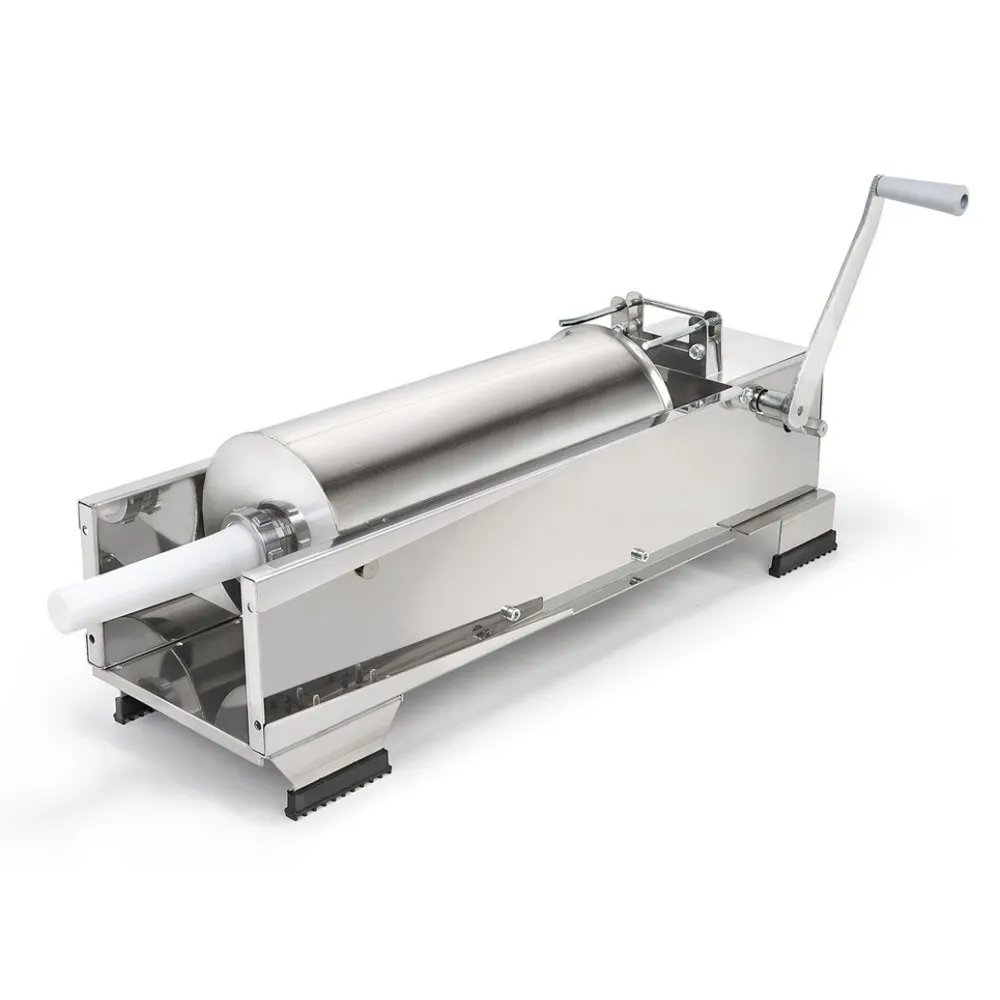
Used to fill sausages and cold meats.
Suitable for butcheries and meat industry.
A sausage filler forces minced meat through a funnel into natural or synthetic casings. A rotating auger inside a stainless-steel cylinder pushes the mix forward under controlled pressure. The speed of the auger determines how quickly the casing fills, letting the operator match the flow to the type of sausage and the skill of the team. Too fast a fill can burst delicate casings; too slow can leave air pockets and uneven links. Two-speed operation gives the flexibility to switch between coarse, open-textured sausages and fine, dense recipes without changing equipment.
To start, the operator loads the cylinder with the prepared meat mix, attaches the chosen polyethylene funnel to the front nozzle, and slides the casing onto the funnel. The control lever selects low or high speed; the motor turns the auger, and the mix is extruded into the casing. The operator guides the filled casing by hand, twisting at intervals to form links. When the cylinder is empty, the motor is stopped, the funnel removed, and the next batch loaded.
The cylinder and sides are made of stainless steel, which resists corrosion from meat acids and cleaning chemicals. Three polyethylene funnels are supplied, sized for 10 mm, 18 mm and 25 mm casings, covering thin breakfast sausages to thick continental varieties. The 7 litre volume allows a single batch to fill several metres of casing without refilling, reducing downtime during a production run. The 27 kg weight keeps the unit stable on a worktop while the auger turns, yet it is light enough to be moved by one person when the kitchen is reorganised. The 200 mm depth, 690 mm width and 240 mm height fit on a standard worktop or a mobile trolley, leaving space beside it for casings and finished links.
Cleaning follows the parts that contact meat. The stainless-steel cylinder and sides are washed with warm water and detergent, then sanitised. The polyethylene funnels are removed and cleaned separately, either by hand or in a dishwasher. The auger is lifted out for thorough cleaning, and the nozzle inspected for trapped meat that could spoil the next batch. Regular disassembly prevents cross-contamination between recipes and keeps the filler ready for the next use.